 ChatGPT
 Claude
 Perplexity
 Gemini
 Grok
What is the enrolment layer?
The enrolment layer is the set of tools, data and people that carry an applicant from first enquiry to confirmed enrolment. It sits between your website, your messaging channels, your CRM, your student records system and your admissions office. It is a working framework, not an official term, and it lets you see the whole chain instead of auditing each tool on its own.
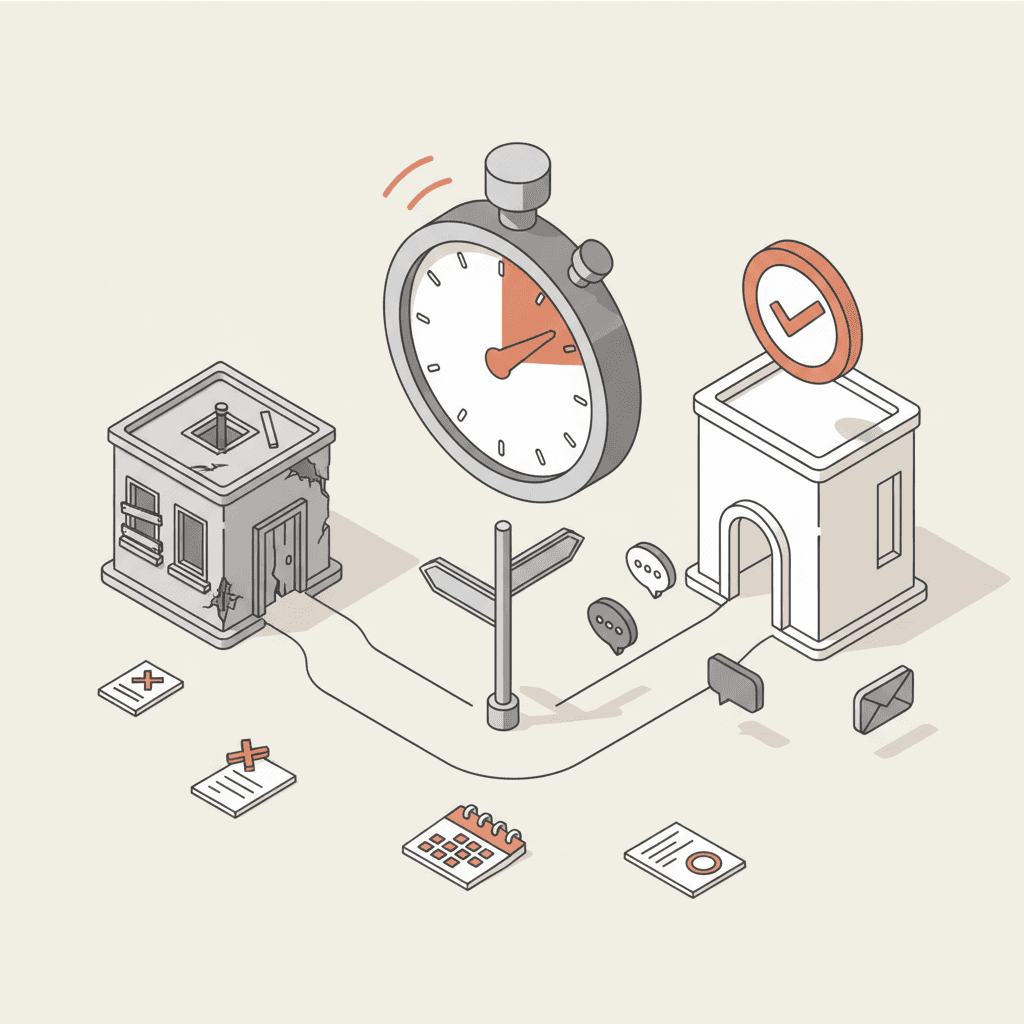
Most colleges run each piece reasonably well in isolation. The losses happen between the pieces. A website enquiry reaches the CRM without its context. An accepted offer never reaches the records office. An applicant hears twice from two people about the same thing.
This article sets out six components and five handoffs, then maps them for Ireland. It builds on our view of the ideal prospect journey from first visit to enrolment, which covers what the applicant experiences. Here we cover what the institution has to deliver.
The six components
Each component has one job, one owner and one kind of data.
| Component | Job | Data produced | Usual owner |
|---|---|---|---|
| Front door | Website, course pages, enquiry forms, chat or AI agent | Question, course of interest, contact details | Marketing / digital |
| Messaging channels | Email, text, messaging apps, phone | Conversation history, channel preference | Admissions + marketing |
| Identity and consent | One applicant, one record, with lawful basis and opt-in | Unique ID, dated consents | Data protection officer |
| CRM | Contact tracking, scoring, sequences, tasks | Applicant stage, source, next action | Admissions / marketing |
| Application and student records | Documents, offer, acceptance, registration | Complete file, offer status, student number | Admissions / records office |
| Admissions team | Assessment, interviews, special cases | Human decision, assessor notes | Head of admissions |
The CRM is often treated as the centre of the setup. For follow-up it is, but the truth about enrolment sits in the student records system. A college that confuses the two ends up counting an applicant as "enrolled" because a sequence marked them so.
The five handoffs where applicants get lost
A handoff is the moment information changes system or owner. The chain breaks there, because nobody owns the space between two tools.
| Handoff | What must pass | Typical failure |
|---|---|---|
| 1. Front door to CRM | Contact details, question, course, consent | The form arrives without the chat context |
| 2. CRM to admissions team | Qualified record, priority, next action | No assignment rule: everyone or nobody replies |
| 3. Team to messaging channels | Message sent, reply received, preferred channel | Two parallel follow-ups from two tools |
| 4. CRM to application file | Status, missing documents, closing dates | Different statuses in each system |
| 5. Application to student records | Accepted applicant, administrative data | Manual re-keying, duplicates, misspelt names |
Each handoff needs three written answers: who owns it, which fields must pass, and what happens when the transfer fails. Without the third, you hear about the failure from an applicant.
What the map looks like in Ireland
In Ireland, most school leavers applying to undergraduate courses go through the Central Applications Office (CAO), which sits between the applicant and the institution. The official application, the points-based offers and the rounds of offers run in a system you do not control, so handoff 4 becomes a synchronisation point with it. Your front door, your messaging and your CRM stay yours.
That structure shapes the calendar. The weeks around Leaving Certificate results and offer rounds are the stress test: enquiries spike, applicants compare offers, and any weak handoff shows. Mature applicants, postgraduate routes and international applicants often apply directly or through other channels, so draw one map per route rather than a single national one.
Quality assurance for programmes sits with QQI, and what your front door says about a course should match the validated programme information. Entry points, points requirements and deadlines change from year to year, so the chain should always point applicants to the current official source instead of repeating figures from memory. That discipline matters most for an AI agent or a chat widget, which can otherwise keep repeating an outdated answer long after the course page has changed.
Ireland is an EU member, so EU data protection law applies, and the Data Protection Commission is the supervisory authority. Define the purpose and lawful basis of each data flow before collecting data, including through a chatbot, and tell applicants when they are speaking to an automated system. In the map this is a component of its own, identity and consent, because it conditions every handoff.
Mapping your enrolment layer in half a day
You need a spreadsheet, an owner per component and a few real applications to trace.
- List the entry points. Enquiry form, chat, phone, open days, careers fairs, social media, listing sites.
- Name one owner per component. A component with no name beside it is an orphan.
- Trace five applicants end to end. Use recent cases, including one who declined an offer.
- Mark every re-keying. Each manual copy is a risk of error and a delay.
- Define the events that count. Choose checkable milestones: first reply sent, open day attended, application complete, offer accepted, registration confirmed.
The result is one page showing where applicants wait, where staff duplicate work and where two systems disagree. Tool decisions should start there.
Where an AI agent fits
An AI agent occupies the front door and part of the messaging channels. It answers questions about courses, entry requirements and open days from your own content, qualifies intent and can offer a slot. It can pass the record to the CRM with the conversation context, which addresses the first handoff.
It does not replace the CRM, the records system or your advisers. Admissions decisions and exceptions stay human, as we explain in our article on guiding applicants from first question to enrolment. For capabilities and limits, see our guide to AI agents for student recruitment, and for the wider strategy our pillar guide to student recruitment.
The agent writes into the chain, so it must follow the chain's rules: same stages as the CRM, same applicant ID, same consents.
Common design mistakes
- Buying one tool per problem. Each tool fixes a local gap and opens another at the border with its neighbour.
- Measuring each piece separately. A strong email open rate says nothing about handoff 3.
- Giving the chain to nobody. If marketing owns the front door, admissions the CRM and the records office the end, no one owns the whole. Name one accountable person.