 ChatGPT
 Claude
 Perplexity
 Gemini
 Grok
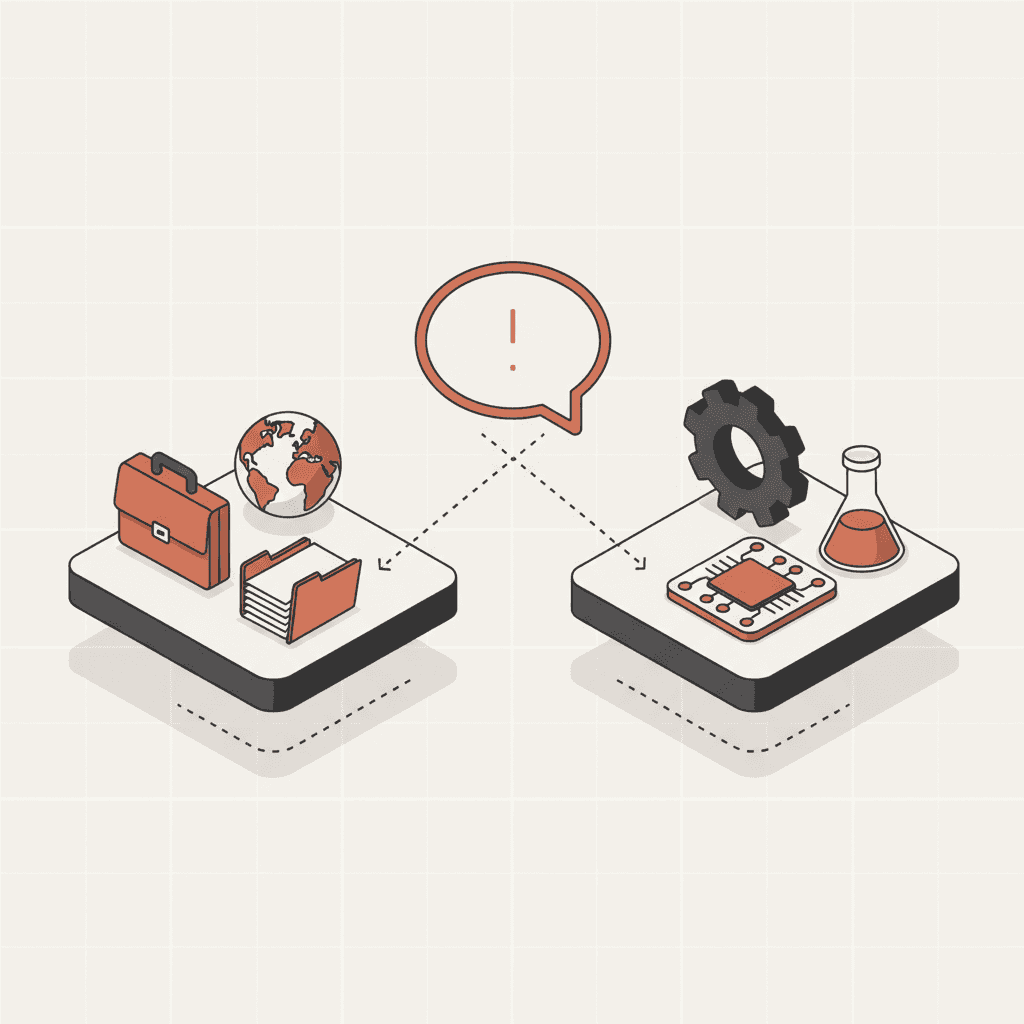
GrokThe same technology, two completely different conversations
Both require an AI chatbot. Neither requires the same one. A prospective MBA candidate landing on a Tier 1 business school website wants to compare three MSc specialisations, understand the GMAT waiver policy, and know what salary the Class of 2025 averaged in the City. A prospective BEng candidate on an engineering faculty website wants to know whether a BTEC Distinction counts as equivalent to an A-level in Physics, or whether they can accredit their sandwich year placement towards CEng registration.
72% of prospective student questions are automatable — tuition fees, graduate outcomes, entry requirements (Source: automated classification across 12,000 Skolbot conversations, 2025). The automation rate is comparable across institution types. What differs entirely is the question taxonomy, the tone the bot must adopt, and the information architecture it needs to draw on.
This comparison is written for Directors of Admissions and Digital Marketing Managers who are evaluating chatbot deployment and need a precise picture of which use cases apply to their institution — not a generic pitch for "AI in higher education".
For the broader deployment context, the AI chatbot for schools: the complete guide covers infrastructure and integration.
Business school chatbot use cases
Programme comparison at speed
Business schools typically run 8-25 taught postgraduate programmes across Finance, Marketing, Strategy, Entrepreneurship, and sector-specific MScs. Prospects — especially international candidates comparing multiple schools — arrive with a short list of questions about specialisations, cohort sizes, and entry requirements they need answered before they'll engage further.
A chatbot configured for a business school should handle the full comparison matrix in a single conversation: "What's the difference between your MSc Finance and MSc Financial Management? Does the Finance route require GMAT? Is the IELTS minimum 6.5 or 7.0 for both?" These are not edge cases. They are the majority of enquiries during peak cycle.
The chatbot must be persuasive as well as informational. Comparative questions in the business school context often signal a prospect who is also speaking to two or three competitor schools. The bot's job is not just to answer — it is to answer in a way that reinforces the school's positioning and moves the prospect toward a campus visit or open day registration.
International student onboarding queries
International students represent a disproportionately large share of business school enquiries. HESA data consistently shows non-UK domiciled students comprising 60-75% of taught postgraduate cohorts at ranked UK business schools. The chatbot must handle visa and compliance queries at volume: CAS letter timelines, Student Visa application evidence, ATAS certificate requirements, and pre-sessional English language routes.
These questions arrive outside office hours, on weekends, and from time zones spanning Singapore to São Paulo. A chatbot that cannot answer "Will my offer letter be issued in time for a Student Visa application with a September start?" is functionally useless to a third of the prospect pool. Multilingual capability — at minimum Mandarin, French, Hindi, Spanish — is a meaningful differentiator for any school drawing internationally.
MBA/MSc career outcomes and salary data
Business school prospects are buyers making a £30,000-£75,000 investment decision. They need data, not marketing copy. The chatbot should surface graduate employment rates, median salary at 12 months post-graduation, and named employer partnerships — ideally at programme level, not just school-wide. AMBA International accreditation reports provide a useful benchmark for what data schools should be publishing.
Questions about alumni network access, mentoring programmes, and networking events are common in the mid-funnel. A well-configured chatbot can route these into open day registration flows, capturing a qualified lead at the moment of peak interest.
Accreditation questions
AACSB, EQUIS, and AMBA triple accreditation are shorthand for programme quality in the international market. Prospects from certain markets — particularly the US, India, and parts of the Middle East — filter search by accreditation status before considering any other factor. The chatbot must be able to confirm accreditation status accurately, explain what each accreditation means in practical terms, and handle "is your MBA AACSB accredited?" without routing to a generic FAQ page.
UCAS Clearing and non-standard entry routes
Business schools with undergraduate portfolios face a sharp demand spike during UCAS Clearing in August. The chatbot must handle Clearing eligibility queries in real time: "I have ABB — can I still apply for BSc Business Management through Clearing?" Foundation year routes, direct entry for mature students, and Recognition of Prior Learning are also high-volume query categories that require precise, programme-specific answers.
Engineering school and faculty chatbot use cases
Degree apprenticeship queries
UK degree apprenticeships have grown significantly as a route into engineering, with the Institute for Apprenticeships & Technical Education approving standards across Civil, Mechanical, Electrical, and Software Engineering. In 2026, these routes attract strong demand from school leavers and employer-sponsored candidates who have detailed, structured questions that differ sharply from traditional applicants.
The chatbot for an engineering faculty must handle: "Does your Civil Engineering degree apprenticeship lead to BEng or MEng?", "What are the employer requirements?", "How many days per week are on-site versus on-campus?", and "Does the programme satisfy the Engineering Council requirements for CEng registration?" These are not questions with a simple "yes/no" answer — they require the bot to draw on detailed programme documentation and route complex eligibility questions to an adviser.
Technical entry requirement queries
Engineering programmes have more structured, less negotiable entry requirements than most business programmes. A-level Mathematics is typically mandatory; Physics or Further Mathematics is often required or strongly recommended. BTEC pathways exist but carry specific unit-level requirements that vary by faculty. The chatbot must navigate these precisely.
Borderline cases are the high-value conversations: "I have A-level Maths (B) and Physics (B) but no Further Maths — am I eligible for the MEng Mechanical Engineering?". A bot that gives a generic "check our entry requirements page" response loses the prospect. A bot that provides a clear conditional answer and offers to connect the student with an admissions tutor converts them. Engineering school chatbots need to be informational and exact — persuasion is secondary to precision.
MEng versus BEng differentiation
The MEng/BEng distinction is a source of recurring confusion for sixth-form applicants who have not yet parsed the difference between an integrated Masters and a Bachelor with potential Masters top-up. The chatbot should be able to explain the academic difference, the implications for CEng registration via the Engineering Council, and the typical salary and progression difference between the two qualifications — without requiring a brochure download or an advisor call.
Year in Industry and sandwich placement queries
Engineering faculties with Year in Industry programmes attract strong interest from students who understand the employability premium attached to industrial experience. Common chatbot queries: "Can I do my Year in Industry abroad?", "Does the placement year extend my programme to five years?", "Who finds my placement — the university or me?". These are factual questions that lend themselves well to automation and can double as qualifying filters: a student asking detailed Year in Industry questions is typically a more motivated prospect.
Accreditation by Engineering Council and professional bodies
CEng, IEng, EngTech — the professional registration framework managed by the Engineering Council is a key decision criterion for engineering applicants who are planning their long-term career, or whose parents are engineers. Questions about IET, IMechE, RAEng accreditation status, and whether a given degree meets the Academic Requirement for CEng, require precise factual answers that should not be left to a generic page link.
STEM-specific funding and bursaries
Engineering students are significantly more likely to be eligible for STEM-specific bursaries, Sutton Trust access programmes, and subject-specific maintenance support than business students. The chatbot should know which funding streams apply to the school's programmes, how to apply, and what the deadlines are. Queries about maintenance loan entitlement and means-tested support are also frequent — especially from first-generation higher education applicants who are not yet familiar with the Student Loans Company process.
Side-by-side comparison
| Dimension | Business school chatbot | Engineering school chatbot |
|---|---|---|
| Primary tone | Persuasive and comparative | Precise and informational |
| Typical peak periods | Jan–March (PG intake), Aug Clearing | Oct–Jan (UCAS cycle), Sept (Clearing) |
| International query volume | Very high (60-75% of PG enquiries) | Moderate (20-35% of UG enquiries) |
| Multilingual requirement | High — Mandarin, French, Hindi, Spanish | Lower — primarily UK domestic |
| Key accreditations handled | AACSB, EQUIS, AMBA | Engineering Council, IET, IMechE |
| Complex eligibility queries | Medium — GMAT waivers, 2:2 cases | High — A-level equivalences, BTEC routes |
| Degree apprenticeship queries | Low | High and growing |
| Career data required | Salary by programme, employer partners | CEng routes, Year in Industry outcomes |
| FAQ depth on funding | Scholarships, employer sponsorship | STEM bursaries, Sutton Trust, SLC |
| Bot handoff trigger | High-complexity MBA/EMBA conversations | Borderline entry requirement cases |
Information architecture: why the underlying structure differs
The business school chatbot operates in an open funnel where comparison shopping is the default behaviour. Prospects arrive with a list of schools, not a firm preference. The information architecture must support rapid comparison across programmes, with data structured to differentiate — not just inform. That means salary benchmarks, employer partnerships, and cohort demographics need to be surfaced proactively, not buried in PDFs.
The engineering school chatbot operates in a prerequisite-driven funnel. Before a prospect can meaningfully engage with programme content, they need to confirm they are eligible. Entry requirements are the gateway, not the destination. The architecture must resolve eligibility questions first — if those cannot be answered clearly, nothing downstream converts.
This structural difference has direct implications for how you configure the bot's decision tree, which data sources it prioritises, and what the handoff triggers are. A business school bot should be designed to move fast and convert; an engineering bot should be designed to be accurate and build trust over a longer consideration cycle.
Schools using an AI chatbot see a median +62% increase in qualified enquiries per month and 280% ROI at 12 months (Source: Skolbot median results across 18 institutions, 2024-2025). That ROI figure holds across both institution types — but the pathway to it differs. For business schools, the gain comes primarily from capturing international and out-of-hours traffic. For engineering schools, it comes from resolving complex eligibility queries that previously required an advisor.
For a vendor comparison that covers both institution types, the best AI chatbot for higher education article sets out evaluation criteria.
Shared requirements: what both institution types need
Despite the differences, several chatbot requirements are universal:
- 24/7 availability. Approximately 40% of prospective student enquiries arrive outside standard working hours. Neither institution type can afford to leave those conversations unanswered.
- CRM integration. A chatbot that qualifies a prospect but fails to push a structured record to Salesforce, HubSpot, or your sector-specific CRM generates work rather than saving it.
- GDPR compliance. The chatbot must identify itself as automated, provide a clear route to a human, and handle personal data under a documented lawful basis. This applies equally to business and engineering school deployments. The Office for Students (OfS) and Quality Assurance Agency (QAA) both expect institutions to be able to demonstrate responsible use of automated tools in applicant-facing contexts.
- Escalation handling. Both institution types have question categories that require a human — borderline academic cases, mental health queries, safeguarding disclosures. The bot's escalation logic must be explicit, not an afterthought.
The chatbot scenarios to increase enrolment article covers the conversation design patterns that work across both institution types.
Which institution benefits more from a chatbot?
The honest answer: both, but the business school typically sees faster payback because the international enquiry volume is higher and the comparison-shopping behaviour means prospects are actively seeking information the bot can provide. An engineering faculty sees stronger long-term retention in its qualified enquiry pool because the bot resolves the eligibility questions that previously caused prospect drop-off before the first advisor contact.
For schools considering their first chatbot deployment, the AI lead qualification for business schools article provides a detailed implementation roadmap that can be adapted for engineering programmes by substituting the qualification criteria.