 ChatGPT
 Claude
 Perplexity
 Gemini
 Grok
GrokA hybrid open day generates two distinct audiences with fundamentally different needs — and the post-event strategy that works for one will fail the other. Physical attendees leave your campus with a gut feeling, an emotional impression of the place; online attendees leave with a clutch of browser tabs, half-watched session recordings, and a stack of unanswered questions. Both groups are convertible. Neither converts on its own without a deliberate follow-up.
This guide focuses exclusively on what happens after the event — the 48-hour window, the nurturing sequence, the measurement framework, and the tools that carry the load when your admissions office is closed.
What a Hybrid Open Day Actually Generates — and Where Prospective Students Go Next
A hybrid open day creates two audiences who attended the same event but experienced entirely different versions of it. The in-person attendee walked the building, spoke to current students, ate in the canteen — sensory experiences that form a strong emotional anchor. The online attendee watched a live stream, typed questions into a chat box, and may have been distracted by their home environment throughout. Both are prospects. Both need follow-up. But the follow-up must be calibrated to what each group actually experienced.
Two Audiences, Two Follow-Up Strategies
| Factor | In-person attendees | Online attendees |
|---|---|---|
| Engagement level | High — physical immersion, face-to-face contact | Variable — easily distracted, dependent on stream quality |
| Information consumed | Broad — campus, atmosphere, staff, peers | Narrower — sessions they actively chose to watch |
| Emotional state | Strong positive or negative impression already formed | Curious but not yet emotionally anchored |
| Next step needed | Confirmation and a clear application pathway | The immersive experience they missed — campus film, peer testimonials, replay |
| Ideal follow-up channel | Personalised email + UCAS application prompt | Replay link + campus tour video + chatbot re-engagement |
| Timing | Within 2 hours of leaving campus | Within 24 hours whilst memory is still fresh |
The implication for admissions teams is straightforward: a single broadcast email sent to everyone who registered — regardless of whether they attended in person, attended online, or did not attend at all — is the most common and most costly mistake made after a hybrid event. Segmentation is not optional. UCAS tracks applicant behaviour across the cycle, and institutions that personalise touchpoints consistently outperform those that send identical communications to unfiltered lists.
The 48-Hour Window After Your Open Day
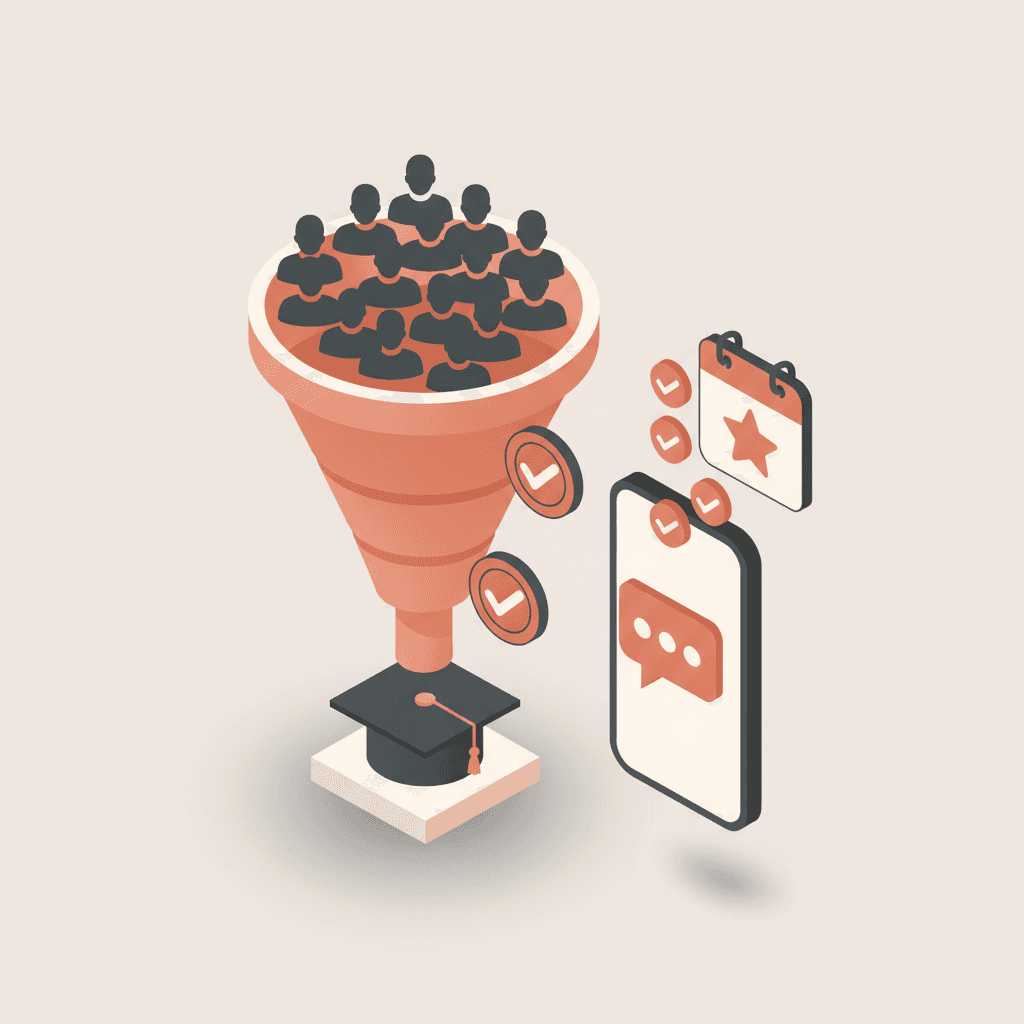
The 48 hours immediately following a hybrid open day are the highest-leverage period in your recruitment cycle. Prospective students are still thinking about you, their attention has not yet shifted to competitor events, and their questions are still active. Waiting longer is costly: every additional day reduces the probability of conversion by a measurable margin, with institutions that delay first follow-up beyond 48 hours seeing approximately a 40% drop in open day visitor-to-application conversion compared to those who respond within two hours.
The structural challenge is timing. 67% of prospective students are active outside standard office hours — with Sunday evening between 8 pm and 9 pm being peak activity (Source: Skolbot interaction logs, 200,000 sessions, Oct 2025 – Feb 2026). Your admissions team is not available at 8:45 pm on a Sunday. Automated tools — email sequences, chatbot follow-up flows, retargeting campaigns — carry the load during those hours. This is not a concession; it is the design.
JISC research on digital experience in higher education consistently identifies 24/7 responsiveness as one of the top expectations of Generation Z applicants. For UK institutions operating under OfS access and participation requirements, digital engagement tools also serve a widening participation function: a prospective student from a non-traditional background who cannot visit campus in person deserves the same quality of post-event follow-up as one who attended in person.
What the Best UK Universities Do Within 48 Hours
The highest-converting UK institutions run a structured set of actions from the moment the event ends:
- Immediate automated confirmation — sent within minutes of the event closing, segmented by attendance type (in-person, online, did not attend). Not a generic "thank you for registering" — a personalised message referencing the programme of interest captured at registration.
- Replay link within 24 hours — online attendees receive the session recording within 24 hours. In-person attendees who missed a parallel session receive targeted clips relevant to their programme of interest. This is the single most impactful follow-up action for online audiences.
- Chatbot follow-up sequence — an automated chatbot flow (not a mass email) re-engages the prospect conversationally: "How did you find the event? Do you have any questions about the [programme name] entry requirements or fees?" The chatbot answers immediately; the human team reviews escalations the next morning.
- Personalised message from the admissions tutor — for hot prospects (those who spent the most time at the event, asked questions in the live Q&A, or visited the application portal before or during the event), a short personalised email or message from a named admissions tutor within 24 hours. Not a template — one or two sentences referencing something specific.
- Social media retargeting — pixel-based audiences built from open day registration data are activated immediately post-event, serving campus tour videos and student testimonial content to prospects who attended online and have not yet visited the application pages.
For a full framework on how to optimise the event itself before you reach this follow-up phase, see our guide to optimising your open day with digital tools.
Building Your Post-Open Day Nurturing Sequence
A well-structured post-open day nurturing sequence moves the prospect from emotional engagement to concrete action — an application started, a campus tour booked, a UCAS personal statement begun. The sequence below is based on what consistently converts across UK higher education institutions; adjust the exact content to your institution's tone and the specific programme the prospect expressed interest in.
| Day | Subject line | Content type | CTA |
|---|---|---|---|
| Day 0 (evening of event) | "Thank you for joining us today, [first name]" | Personalised thank-you, replay link for online attendees, key highlights for in-person | "Save your place — apply now" / "Book a 1:1 with your admissions adviser" |
| Day 1 | "Your questions from today — answered" | FAQ round-up based on questions asked during the event; targeted programme content | "Download the course guide" / "Start your UCAS application" |
| Day 3 | "Meet [current student name] — [programme] at [institution]" | Student testimonial video or written case study; life on campus content for online attendees | "See the campus — virtual tour" / "Attend our next online Q&A" |
| Day 7 | "One step closer — here's what happens next" | Clear, step-by-step application pathway; UCAS deadlines highlighted; funding and fees clarified | "Start your application" / "Book a call with admissions" |
| Day 14 | "We have a place with your name on it, [first name]" | Urgency around upcoming deadlines or limited places; peer social proof (cohort stats, graduate outcomes) | "Complete your application today" / "Request a callback" |
The sequence should be triggered differently for in-person and online attendees — see the table in the opening section. Online attendees benefit from receiving the replay link on Day 0 and the virtual campus tour on Day 3. In-person attendees who have already experienced the campus do not need the campus tour; they need the application pathway and deadline information faster.
Using a Chatbot to Re-Engage After the Event
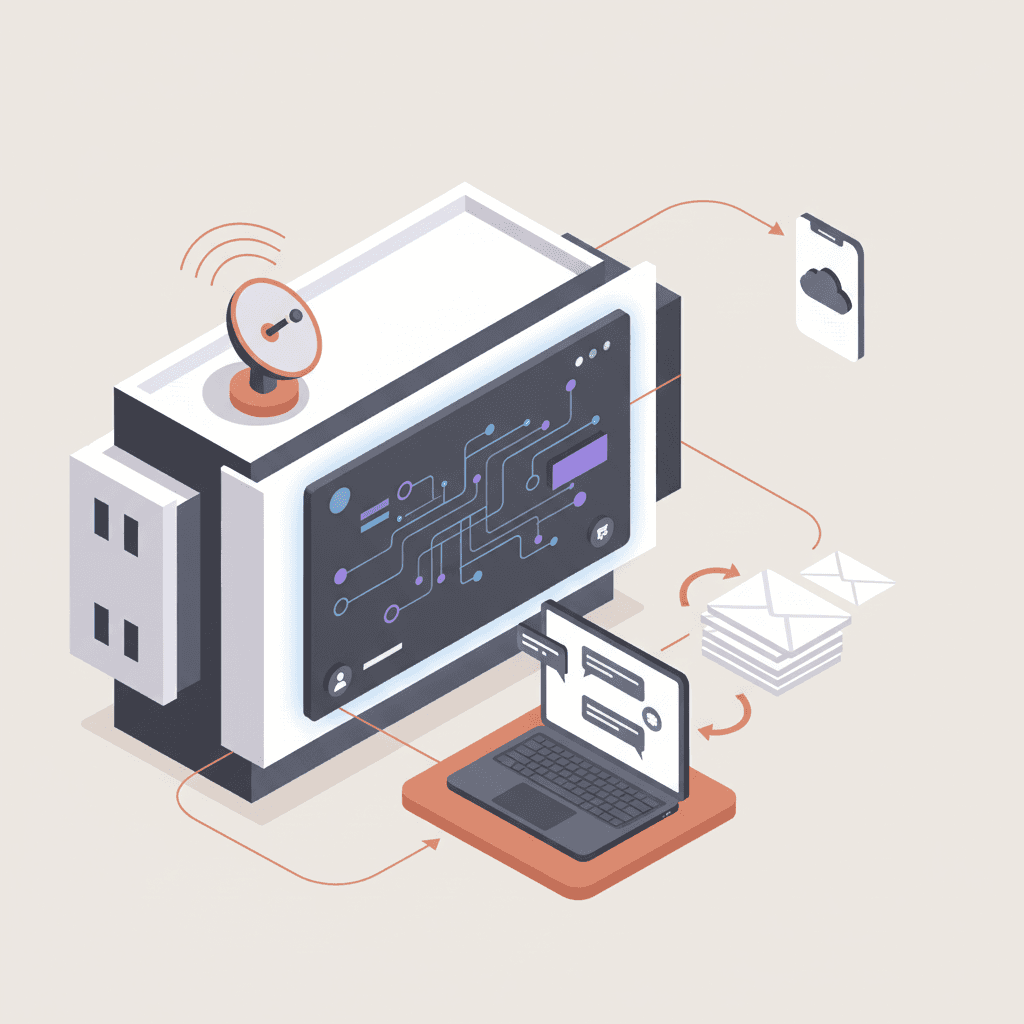
A chatbot is the most effective tool for post-open day re-engagement because it segments and responds at a scale no admissions team can match manually. Within 24 hours of the event, a chatbot can identify every registered prospect, determine whether they attended (in person or online), and initiate a personalised conversation based on their profile.
The mechanics: the chatbot cross-references the event attendance log against the registration database, then opens a conversation tailored to each group. For online attendees who missed a session: "The replay of the [programme name] webinar is now live — would you like the link?" For in-person attendees who asked a question in the live Q&A: "You asked about [topic] during the session — here's the full answer from our admissions team." For no-shows: "We missed you — can I send you the highlights or arrange a one-to-one call?"
This approach also handles the UCAS application reminder naturally. A chatbot that already has a relationship with the prospect can ask at day seven: "Have you started your UCAS application? The January deadline is [date] — I can send you the link and walk you through the entry requirements." That is a conversion conversation, not a mass email.
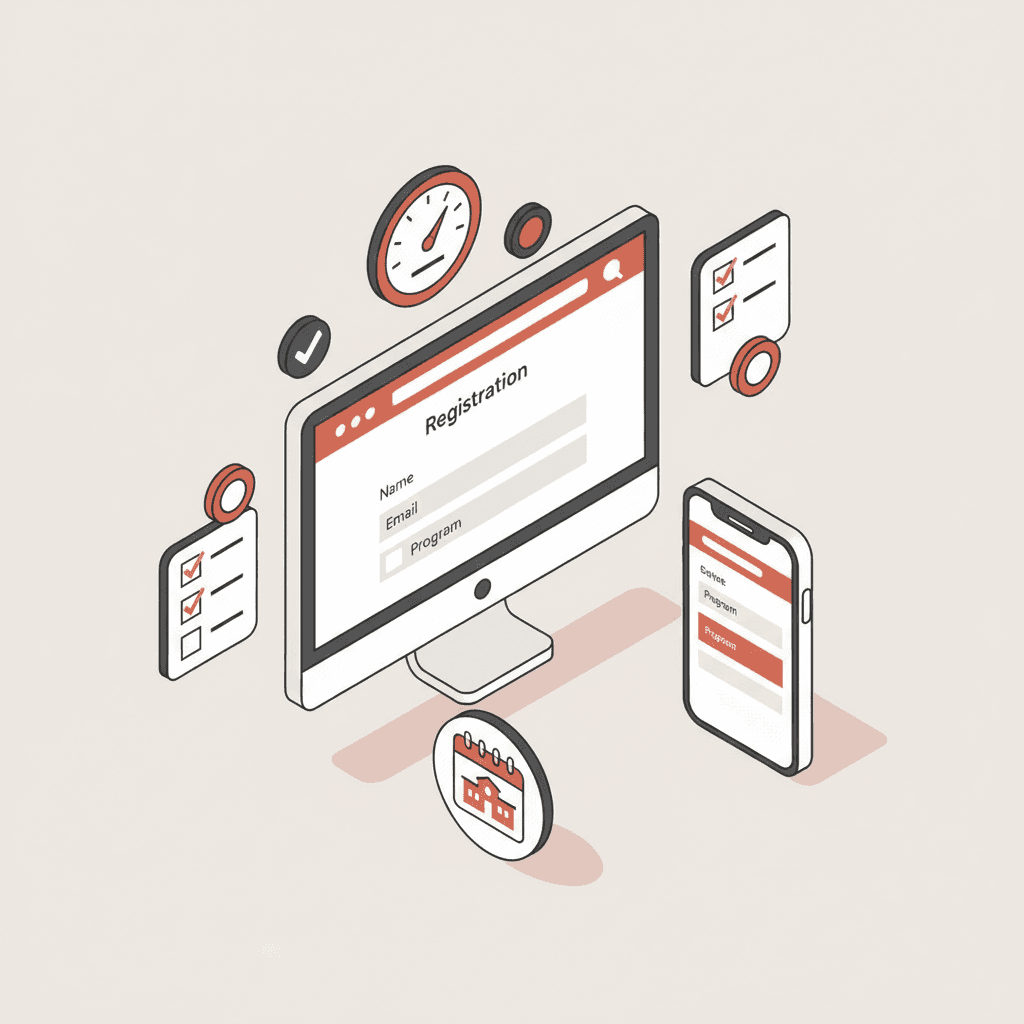
Personalised chatbot follow-up reduces open day no-shows to 19%, compared to 52% with no follow-up at all. (Source: Skolbot tracking, 4,200 open day registrations across 12 institutions, Oct 2025 – Feb 2026.) The no-show figure matters here because it applies retrospectively: prospects who registered but did not attend your hybrid event can still be recovered through chatbot re-engagement — they are warm leads, not cold ones.
For a full breakdown of how a chatbot manages open day registrations from first contact through to post-event follow-up, see our guide to AI chatbot open day registration.
Measuring Your Hybrid Open Day's Real Impact
The standard measurement approach — total registrations, total attendance — tells you almost nothing about whether your hybrid open day is generating enrolments. A sold-out event with no follow-up strategy produces fewer enrolments than a half-attended event with an excellent nurturing sequence. Move beyond attendance numbers to the metrics that map onto revenue.
| KPI | What it measures | How to calculate | Target |
|---|---|---|---|
| Registration conversion rate by channel | Which channel drove qualified registrants | Registrations ÷ unique visitors per channel × 100 | Chatbot: >18%; form: >6% |
| Replay completion rate | How engaged online attendees were with your content | Completed replays ÷ replay link clicks × 100 | >40% |
| Email open rate at 7 days post-event | Whether your nurturing sequence is landing | Unique opens on Day 7 email ÷ delivered emails × 100 | >35% (personalised) |
| Chatbot re-engagement rate | How many attendees your chatbot re-activated | Chatbot conversations initiated ÷ total attendees × 100 | >25% |
| UCAS applications within 30 days | Direct conversion from event to application | Applications submitted within 30 days ÷ event attendees × 100 | >30% (in-person), >15% (online) |
| Cost per qualified lead | Efficiency of the hybrid format | Total event cost ÷ number of prospects who started an application | Benchmark against previous in-person-only events |
The Quality Assurance Agency (QAA) advises institutions to demonstrate the quality of information and guidance provided to prospective students throughout the recruitment cycle — post-event follow-up quality is directly relevant to this expectation. Institutions with structured follow-up are also better placed to evidence their engagement activity to OfS under access and participation plan reporting requirements.
Under UK GDPR and the ICO's guidance, the data collected during a hybrid open day — registration information, attendance records, chatbot conversation logs — must be processed lawfully and retained only as long as necessary. Most institutions rely on legitimate interests as the basis for post-event follow-up communications; ensure your privacy notice captures this explicitly. For a full treatment of compliant data use in digital recruitment, see our guide to the digital candidate journey for schools.
Benchmarks: What High-Performing Universities Target
The chatbot channel delivers an 18.4% open day registration rate, compared to 6.2% via standard contact forms. (Source: UTM tracking + multi-touch attribution, 2025–2026 cycle, 35 institutions.) That 3x differential is not driven by brand or budget — it is driven by instant, personalised responses. When a prospective student asks about an open day at 9 pm on a Sunday, a chatbot answers in three seconds and offers to register them in the same conversation. A contact form delivers an automated acknowledgement and a 48-hour wait.
For post-event follow-up specifically, the highest-performing institutions in our panel target these thresholds:
- Email open rate on Day 0 thank-you: >55% (personalised with first name and programme of interest)
- Replay completion rate: >45%
- Chatbot re-engagement within 48 hours: >28% of registered prospects
- UCAS application started within 14 days: >22% of in-person attendees
- Application started within 30 days: >14% of online-only attendees
These figures require segmentation, automation, and a named admissions contact for the highest-intent prospects. They are achievable without a large team — but not without the right tools in place before the event ends.