 ChatGPT
 Claude
 Perplexity
 Gemini
 Grok
GrokThe GDPR applies to every piece of data your Irish institution collects about a prospect or student
Since 25 May 2018, the General Data Protection Regulation (GDPR — Regulation 2016/679) has governed all personal data processing across the European Union. Ireland, as an EU Member State, applies the GDPR directly, supplemented by the Data Protection Act 2018, which transposes and complements the Regulation under Irish law.
For a university, Technological University, or private college, that scope extends well beyond enrolment records: CAO applications, contact forms, chatbot interactions, website analytics, open day registrations, Leaving Cert results, health data, and even photographs taken on campus. Non-compliance is not a theoretical risk. The Data Protection Commission (DPC) has become one of the most active supervisory authorities in Europe, most notably issuing a EUR 1.2 billion fine against Meta Ireland in 2023 and a EUR 405 million fine against Instagram for minors' data processing. The maximum penalty under the GDPR — EUR 20 million or 4% of annual global turnover — focuses minds in boardrooms from Trinity College Dublin to Griffith College.
This guide covers the concrete obligations for Irish higher education institutions: data categories, legal bases, consent, data subject rights, DPO requirements, and the implications of the AI Act for admissions tools and chatbots.
Categories of personal data processed by an Irish HEI
Prospect data (pre-enrolment)
Data collected before enrolment forms the first GDPR perimeter for any institution. For Irish HEIs, this typically includes:
- Identification data — name, email address, phone number, collected through contact forms, chatbot, or open day registration
- Browsing data — pages visited, time spent, acquisition source, gathered by Google Analytics or equivalent
- Conversational data — questions posed to the chatbot, conversation history, language used
- Application data — CAO application ID, Leaving Certificate results (imported electronically from the State Examinations Commission), personal statement, transcripts for mature students, identity documents
89% of prospects ask about tuition fees and the Student Contribution, while 78% enquire about work placements and Erasmus opportunities (Source: analysis of 12,000 Skolbot chatbot conversations, Sept 2025 — Feb 2026). These exchanges constitute personal data the moment an identifier (name, email) is linked to the conversation.
Enrolled student data
Once enrolled, a student generates a significantly larger volume of data:
- Academic data — marks, attendance, progression on the NFQ ladder, degree certificates
- Financial data — Student Contribution payments, SUSI grant status, tuition fees for non-EU programmes, payment schedules
- Campus life data — building access (student ID card), catering, partner accommodation, library records
- Sensitive data — disability, social circumstances, health records (campus health service, DARE applicants)
Sensitive data (Article 9 of the GDPR) demands enhanced protections: a specific legal basis, strict access limitation, and a prohibition on automated decision-making except for explicit exceptions. The DPC has published dedicated guidance for the education sector on handling special category data.
Alumni data
Processing alumni data (directory, donations, networking events) requires a distinct legal basis from the one used during studies. Consent given for enrolment does not automatically cover post-graduation engagement — a distinction Irish HEIs with active fundraising arms (TCD, UCD, RCSI) must operationalise carefully.
Applicable legal bases in Irish higher education
The GDPR (Article 6) defines six legal bases for processing personal data. In Irish higher education, four are primarily used:
-
Performance of a contract (Article 6.1.b) — The strongest basis for data linked to enrolment, study, and billing. The student contract (including Student Contribution payment) justifies processing the data necessary for its performance.
-
Legitimate interest (Article 6.1.f) — Applicable to recruitment marketing (sending prospectuses, CAO follow-ups) and website analytics. Requires a documented balancing test: the institution's interest must not override the individual's rights. The European Data Protection Board (EDPB) recommends formal documentation of this balance for each processing activity.
-
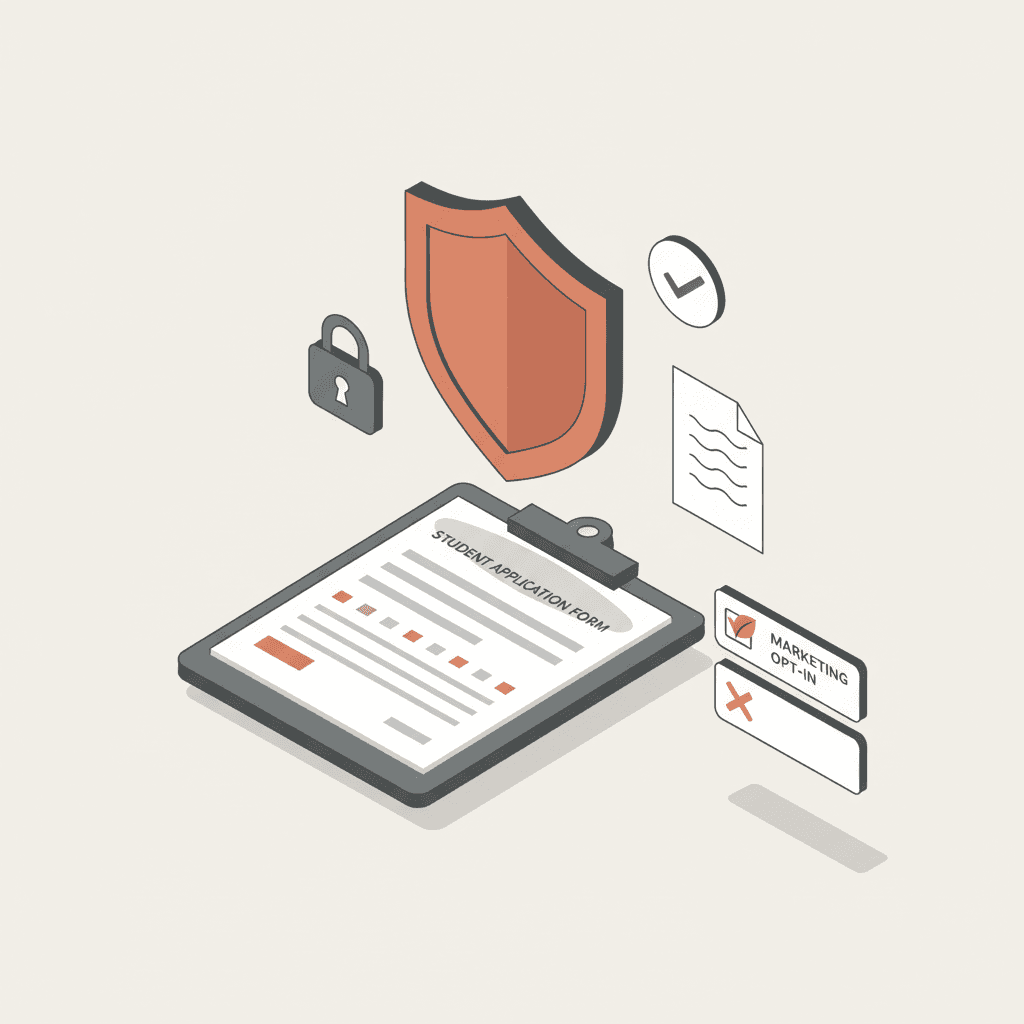
Consent (Article 6.1.a) — Required for marketing newsletters, non-essential cookies, and data sharing with partners. Consent must be freely given, specific, informed, and unambiguous. A contact form with a pre-ticked box reading "I wish to receive communications" does not constitute valid consent under either the GDPR or the Irish ePrivacy Regulations 2011.
-
Legal obligation (Article 6.1.c) — Covers data transmission to authorities (CAO, HEA, QQI, Revenue for SUSI cross-checks) and the retention of degree certificates for statutory periods set by QQI.
Common mistake: consent as the default basis
Many Irish institutions default to consent as the sole legal basis for all processing. This is a strategic error. Consent can be withdrawn at any time (Article 7.3), meaning that if a student revokes consent, the institution loses the right to process their data — including data required for their programme.
The correct approach: use contract performance for processing linked to education, legal obligation for regulatory submissions (HEA statistical returns, QQI award records), legitimate interest for recruitment (with a documented balancing test), and consent only for marketing and cookies.
UK GDPR vs EU GDPR in Ireland: clearing up the confusion
Irish institutions with UK partners, Northern Irish campuses, or British applicants sometimes conflate the two regimes. They are now legally distinct.
| Aspect | Ireland (EU GDPR + DPA 2018 IE) | United Kingdom (UK GDPR + DPA 2018 UK) |
|---|---|---|
| Regulation | EU Regulation 2016/679 directly applicable | UK GDPR (retained post-Brexit, diverging) |
| National law | Data Protection Act 2018 (Ireland) | Data Protection Act 2018 (UK) |
| Supervisory authority | Data Protection Commission (DPC) | Information Commissioner's Office (ICO) |
| Digital consent age | 16 | 13 |
| Cross-border transfers | Free movement within EEA | Adequacy decision with EU (under review) |
| One-Stop-Shop | Yes (DPC is lead authority for many US tech HQs) | No (left the mechanism in 2021) |
For Irish HEIs recruiting from Northern Ireland or Great Britain, data collected in the UK on UK applicants falls under UK GDPR until transferred; once on Irish systems, EU GDPR applies. Document the transfer mechanism (EU adequacy decision for UK is currently valid but must be monitored).
Consent in the Irish educational context
Consent for minors
The GDPR (Article 8) sets the digital consent threshold at 16, and Ireland has maintained 16 in the Data Protection Act 2018. This contrasts with France (15) and the UK (13). For most undergraduate programmes, applicants are 17-18 following the Leaving Cert, but PLC courses, access programmes, and DARE/HEAR pathways may involve younger prospects.
For minor prospects: parental consent is required for any consent-based processing (marketing newsletter, marketing cookies). Forms must include a verification mechanism (parental email, double opt-in).
Consent and AI chatbot
An AI chatbot that collects personal data must inform the prospect before the conversation begins:
- That they are interacting with an artificial intelligence (AI Act transparency obligation, Article 50)
- What data is collected and why
- How to exercise their rights (access, rectification, erasure) and the DPC as the competent authority for complaints
- How long conversations are retained
An information banner at chatbot launch, with a link to the privacy notice, fulfils this obligation. The chatbot must not condition access to information on providing personal data: a prospect should be able to ask about CAO points requirements for a programme without giving their name or email — a principle reinforced in our guide to AI chatbots for Irish colleges.
Data subject rights
The GDPR confers eight fundamental rights on data subjects (prospects, students, alumni). Your institution must have operational procedures to respond to each within one month:
- Right of access (Article 15) — The student may request a copy of all data you hold about them.
- Right to rectification (Article 16) — Correction of inaccurate or incomplete data.
- Right to erasure (Article 17) — The "right to be forgotten". Limited by statutory retention obligations (QQI award records, accounting records).
- Right to restriction (Article 18) — Freezing of processing while a complaint is investigated.
- Right to data portability (Article 20) — Transfer of data in a structured format to another institution.
- Right to object (Article 21) — Refusal of processing based on legitimate interest, including marketing profiling.
- Right not to be subject to automated decision-making (Article 22) — Fundamental for admissions tools that use AI.
- Right to withdraw consent (Article 7.3) — At any time, without justification.
Cascading erasure: a technical challenge
When a prospect exercises the right to erasure, all data concerning them must be removed from every system: CRM, chatbot, email platform, named analytics, backups. The cost per enrolled student in the Irish market ranges from EUR 2,800 to EUR 3,600 (Source: Skolbot internal analysis of Irish HEI recruitment spend, 2025 — zero-party data from 14 participating institutions). Each erasure request therefore represents a marketing investment loss — all the more reason to minimise data collection from the outset.
Deletion must be effective within one month. A documented cascading erasure process, tested regularly, is essential.
The DPO: role and obligations for Irish HEIs
When is DPO designation mandatory?
The GDPR (Article 37) makes DPO designation mandatory when processing is carried out by a public body, or when the controller's core activities require regular and systematic monitoring of individuals at large scale.
All Irish public HEIs are legally required to appoint a DPO because they are public authorities under the Data Protection Act 2018 (Ireland). For private colleges (Griffith, Hibernia, DBS, NCI, RCSI), the DPC considers that tracking hundreds or thousands of prospects and students constitutes large-scale processing, making DPO designation almost universally required in practice.
Internal or external DPO?
Both options are valid. An internal DPO understands institutional processes better but risks a conflict of interest if they also hold a decision-making role (IT director, registrar). An external DPO brings specialist expertise and guaranteed independence, but needs time to understand the specific context of Irish higher education (QQI validation, HEA reporting, CAO data flows).
The DPO must have direct access to senior management (Governing Authority for universities, Board for TUs), cannot be penalised for carrying out their duties, and must be given adequate resources (budget, time, tools).
Irish HE regulatory map: who watches what
| Authority | Remit | Website |
|---|---|---|
| DPC (Data Protection Commission) | GDPR enforcement, DPA 2018 IE, data breach notifications | dataprotection.ie |
| HEA (Higher Education Authority) | Funding oversight, statistical returns, system governance | hea.ie |
| QQI (Quality and Qualifications Ireland) | Award validation, institutional accreditation, award records | qqi.ie |
| DFHERIS | Policy on FE and HE, research, innovation | gov.ie |
| CAO (Central Applications Office) | Admissions processing, LC results distribution | cao.ie |
| State Examinations Commission | Leaving Certificate administration and results issuance | examinations.ie |
The AI Act and its implications for Irish universities
Classification of AI systems in education
The EU AI Act (Regulation 2024/1689) classifies artificial intelligence systems by risk level. For higher education, two categories are relevant:
High risk (Annex III) — AI systems used for admissions, application assessment, or automated exam grading are classified as high risk. They require:
- A documented risk management system
- High-quality, representative, and bias-free training datasets
- Effective human oversight (AI recommends, human decides)
- Full transparency towards data subjects
- Registration in the European AI high-risk system database
Limited risk (Article 50) — Pre-admissions information chatbots fall under limited risk. The primary obligation is transparency: the prospect must know they are interacting with AI. No conformity assessment, no registration, but a clear information duty.
Ireland has indicated the DPC will be the lead regulator for fundamental rights aspects of the AI Act, consolidating its role as a major European tech supervisor given the Dublin HQs of Meta, Google, TikTok, OpenAI EMEA, and Microsoft.
Implementation timeline
The AI Act enters into force progressively. Prohibitions on unacceptable-risk systems have been effective since February 2025. Obligations for high-risk systems apply fully from August 2026. Irish universities using AI tools for application screening, whether for CAO-routed applications or direct PG admissions, must prepare now.
Data security: technical and organisational measures
The principle of data minimisation
Article 5.1.c of the GDPR requires collecting only the data strictly necessary for the stated purpose. For a chatbot, this means: not requiring name, email, or phone number to answer a question about programmes. Identifier collection is only justified when the prospect wishes to be contacted.
Essential technical measures
- Encryption — In transit (TLS 1.3) and at rest (AES-256) for all personal data
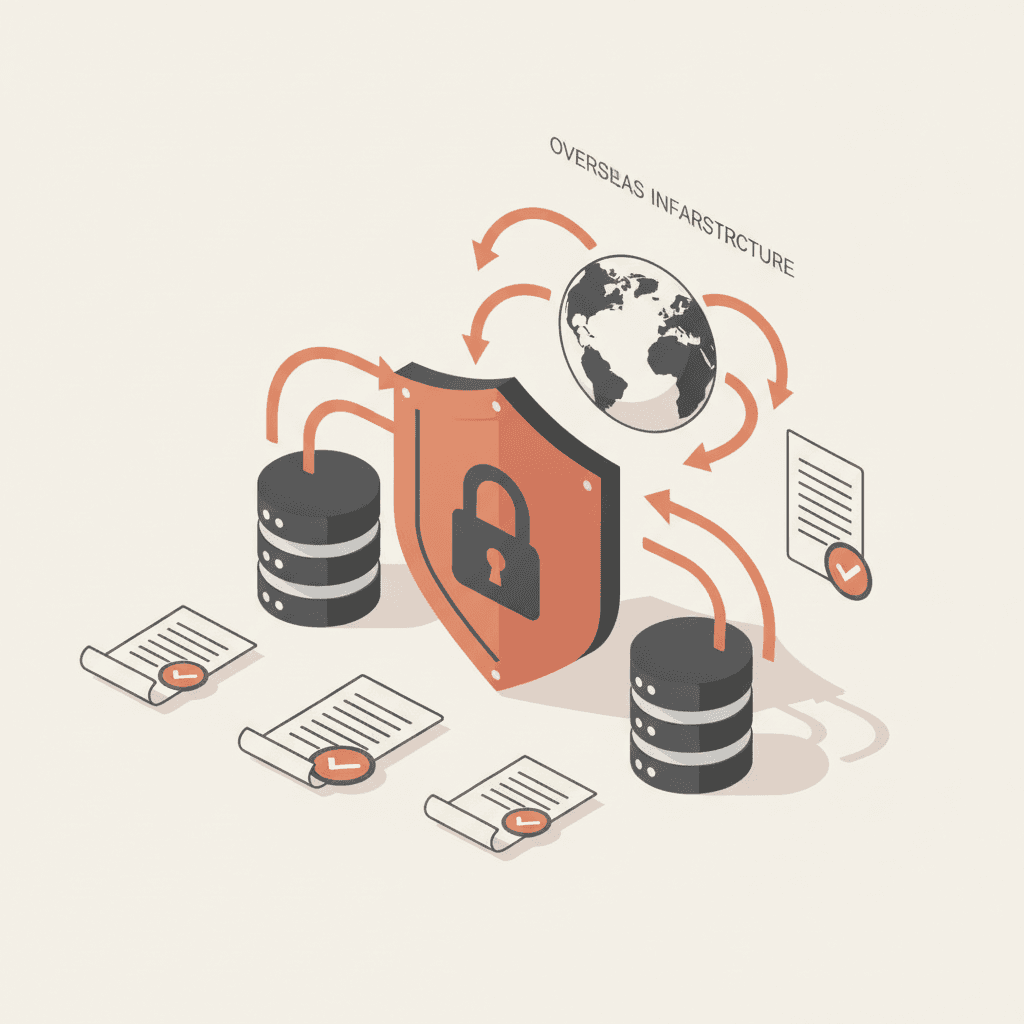
- European hosting — Servers within the EU/EEA, in line with EDPB recommendations on international transfers
- Pseudonymisation — Separation of direct identifiers from behavioural data
- Access logging — Traceability of who accesses which data, when
- Encrypted backups — With regular restoration testing
- Automated deletion — Purge of data beyond the defined retention period
Data Protection Impact Assessment (DPIA)
Article 35 of the GDPR requires a DPIA before any processing likely to result in a high risk. For an Irish HEI, this includes:
- Deploying an AI chatbot that collects personal data
- Using AI tools for application assessment or plagiarism detection
- Campus CCTV surveillance
- Prospect profiling for marketing purposes
The DPIA must describe the processing, assess its necessity and proportionality, identify risks, and propose mitigation measures. The DPC has published a specific DPIA template Irish organisations can adapt. For a deeper dive, see our DPC compliance guide for Irish colleges.