 ChatGPT
 Claude
 Perplexity
 Gemini
 Grok
GrokWhy AI visibility is now a KPI, not a side project
Communications and marketing directors at US colleges face a changed environment. When a high school junior asks ChatGPT "what are the best business schools in the Midwest under $40,000 a year," or a prospective transfer student prompts Perplexity to compare nursing programs in the Southeast, the institutions that appear in those answers gain a material advantage. Those that do not appear do not exist in that decision moment.
European benchmarks show that on average only 19% of AI engine responses mention a higher education institution on sector-specific queries — and early US monitoring data suggests the competitive landscape here is even more intense, with flagship publics and nationally ranked schools capturing a disproportionate share of AI citations. Regional private colleges, liberal arts institutions, and community-focused universities are often invisible outside branded queries.
That gap is not permanent. It is measurable, and it is closeable. But only if you treat AI visibility as a tracked metric, not an afterthought.
For a full overview of why AI visibility matters for enrollment strategy, see our comprehensive GEO guide for US schools.
The 3 KPIs that actually matter
Most communications teams have no systematic way to measure AI visibility. They check ChatGPT occasionally, notice they appear or do not, and move on. That approach produces no trend data, no benchmarks, and no actionable intelligence.
Three KPIs give you a foundation you can track monthly.
| KPI | What it measures | Realistic starting point for most US colleges |
|---|---|---|
| Citation rate | % of target prompts where your institution is named | 10–25% (branded + generic mix) |
| Attribution rate | % of citations where your site is linked as a source | 3–15% (Perplexity higher than ChatGPT) |
| Mention quality score | Whether your institution appears as a primary recommendation or a secondary mention | Score 1–5; most start at 2–3 |
KPI 1: Citation rate
Citation rate is the share of your target prompt set in which your institution is named at all. Build a prompt list of 30 to 50 queries that reflect real enrollment intent: branded queries, program-level queries, geography queries, admissions queries, and financial aid queries.
For a private liberal arts college in the Northeast, that might include: "[college name] tuition and financial aid," "best small liberal arts colleges in New England," "colleges with strong study abroad in the Northeast," "undergraduate business programs with internship focus in Massachusetts."
Run those prompts monthly in ChatGPT, Perplexity, and Gemini. Record citation rate per engine. Most US colleges start between 10% and 30% depending on national name recognition.
KPI 2: Attribution rate
Attribution rate measures how often your institution is not just named, but cited with a link to your .edu site. Perplexity shows source links prominently; ChatGPT less often. A linked citation can become direct traffic, an inquiry submission, or a Common App visit — a bare mention cannot.
Attribution also reveals which external sources AI engines trust most for your institution. Do they link to your site, your College Scorecard profile, your U.S. News & World Report listing, your Niche page, or a College Board directory entry? Each answer tells you where to focus authority-building effort.
KPI 3: Mention quality score
A mention is not equal to a recommendation. Score each citation on a 1–5 scale: 1 means your institution appears as a vague alternative, 5 means it is the lead recommendation for the query. Track the average across your prompt set month over month.
A college moving from an average mention quality of 2.1 to 3.4 over six months is making real progress even if raw citation rate has not yet moved much.
The 90-minute monthly ritual
Monitoring AI visibility does not require a dedicated platform or a large team. A structured monthly ritual gives you the data you need to act. Schedule 90 minutes on the same week each month — ideally following Perplexity and ChatGPT's update cycles.
Minutes 0–20: Run the branded prompt battery. Test your institution name, your flagship programs, your accreditations, and your financial aid pages in ChatGPT and Perplexity. For each, record citation (yes/no), source linked, and context (lead mention vs. secondary). Note any factual errors — AI engines sometimes cite outdated accreditation status or incorrect tuition figures, which can mislead prospective students and create FTC-adjacent concerns around accuracy in marketing contexts.
Minutes 20–45: Run the generic prompt battery. Test 15–20 non-branded queries: "best colleges for nursing in [your state]," "affordable private universities in [your region]," "liberal arts colleges with strong career outcomes." Record where your institution appears versus which competitors dominate.
Minutes 45–65: Competitor gap analysis. For the 5 prompts where a competitor appears and you do not, investigate why. Is the competitor cited on U.S. News, Niche, or College Scorecard more prominently? Do they have a stronger FAQ page? More outcome data published? These gap findings drive your content priorities for the next month.
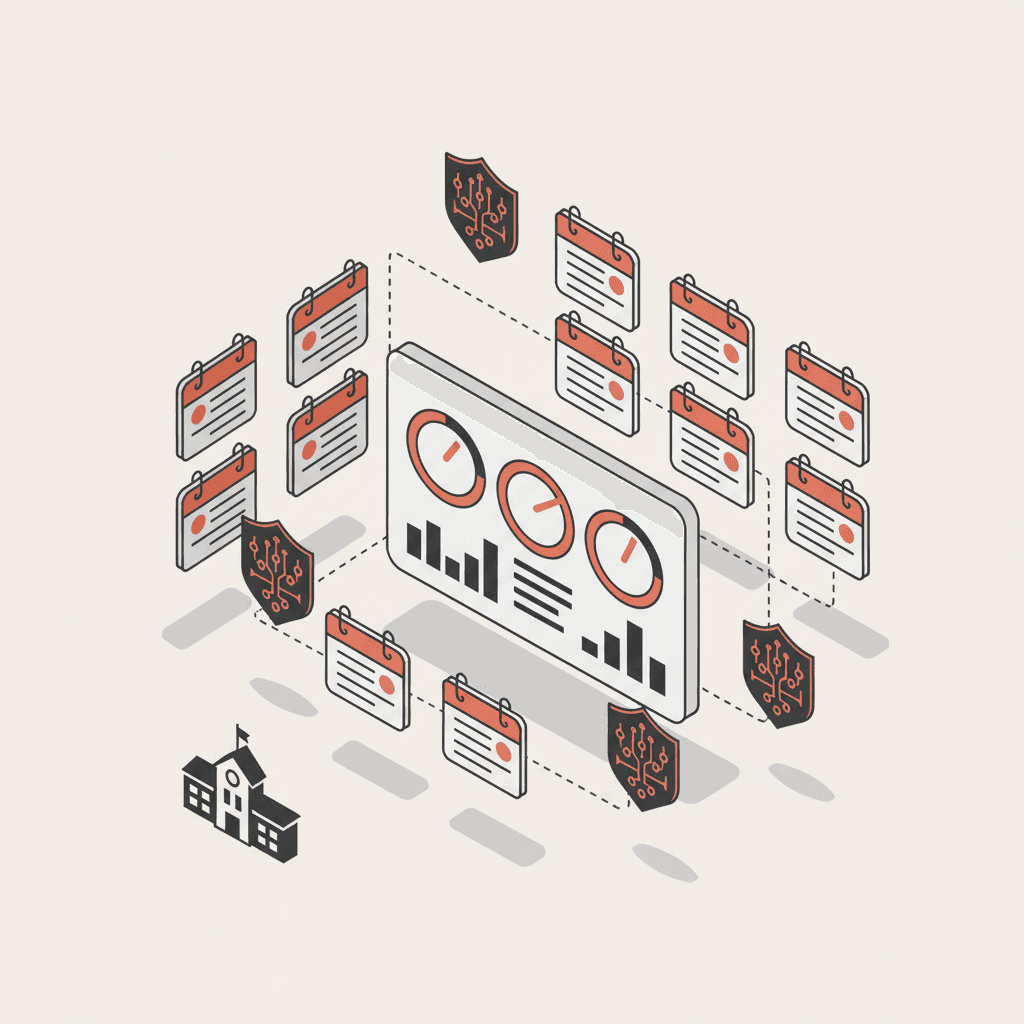
Minutes 65–80: Update your dashboard. Record all three KPIs, calculate month-over-month change, and note the top external source cited for your institution across engines.
Minutes 80–90: Set one priority action. Every month, commit to one specific change: publish an updated outcomes page, add Schema.org EducationalOrganization markup, create a FAFSA FAQ, update your Common App listing, or request a profile refresh on a key directory.
Why US colleges face specific AI visibility challenges
The US higher education landscape creates particular dynamics for AI citation patterns.
Accreditation signals matter. ChatGPT and Perplexity both draw on publicly available data about institutional accreditation. If your regional accreditor — HLC, SACSCOC, WASC, NECHE, MSCHE, or NWCCU — is not clearly surfaced on your site and cross-referenced with authoritative third-party sources, AI engines may be uncertain how to frame your institution's standing. Make your accreditation page machine-readable and link it to NCES data.
FAFSA and financial aid context drives queries. After ongoing FAFSA processing shifts, prospective students and families are actively researching aid processes via AI. Colleges with clear, structured FAQ pages covering expected family contribution, net price calculators, and scholarship deadlines are far more likely to be cited on aid-related queries than those burying this information in PDFs.
FERPA compliance shapes your monitoring workflow. If your GEO monitoring process ever involves cross-referencing AI prompt results with identifiable student or applicant data, that workflow needs a FERPA review. Most AI visibility monitoring does not touch student records, but as institutions build richer enrollment analytics dashboards, it is worth confirming that your process stays on the right side of that line.
US News, Niche, and College Board are trust anchors. AI engines in the US context weight citations from U.S. News & World Report, Niche, and College Board heavily. An institution with a complete, accurate, and recently updated profile on each of those platforms gains an AI citation advantage over one that has not maintained its external directory presence.
From monitoring to action: what the data tells you
Low citation rate across all engines
Your institution lacks machine-readable signals. Priority: implement EducationalOrganization Schema.org markup on your homepage and program pages. Institutions with structured Schema.org data gain an average of +12 points of AI visibility (Source: Skolbot GEO Monitoring, Feb 2026). See our guide to diagnosing your school's ChatGPT visibility.
High Perplexity citation, low ChatGPT citation
Your current web presence is strong but your accumulated authority layer is thinner. ChatGPT draws more on historical notability and consistent external references. Focus on ensuring your institution is complete and accurate on College Scorecard, Common App, IPEDS, U.S. News, and your regional accreditor's public directory.
Cited but never first
The engine acknowledges your institution but does not position it as the primary answer. Strengthen differentiation signals: published graduation rates, NCLEX or bar passage rates where applicable, employer outcome statistics, specific internship placement numbers. AI engines reward verifiable specificity over marketing language.
Cited without attribution
Your name appears but your site is not linked. Audit crawlability, canonical URLs, and whether critical data pages are accessible in HTML. Many US colleges still embed key outcome information in non-crawlable PDFs or password-protected portals that AI engines cannot index.
For a structured audit of your Perplexity presence specifically, see our school Perplexity visibility audit.
Building your visibility trend over time
A single month of data is a starting point. Twelve months of data is a competitive asset. As you run the monthly ritual consistently, you will start to see which content investments move the needle and which do not.
A common pattern for US colleges: implementing Schema.org markup produces a Perplexity citation gain within 4–6 weeks. Publishing a structured outcomes page with employer names, median salaries, and licensure rates produces a ChatGPT citation gain over 2–3 months as the page gains external references. Building or refreshing your College Scorecard profile produces gains across all engines over one quarter.
For a structured action plan covering the first 90 days of your GEO program, see our 90-day action plan for AI visibility.