 ChatGPT
 Claude
 Perplexity
 Gemini
 Grok
GrokThe median ROI for a student chatbot is 280% at 12 months
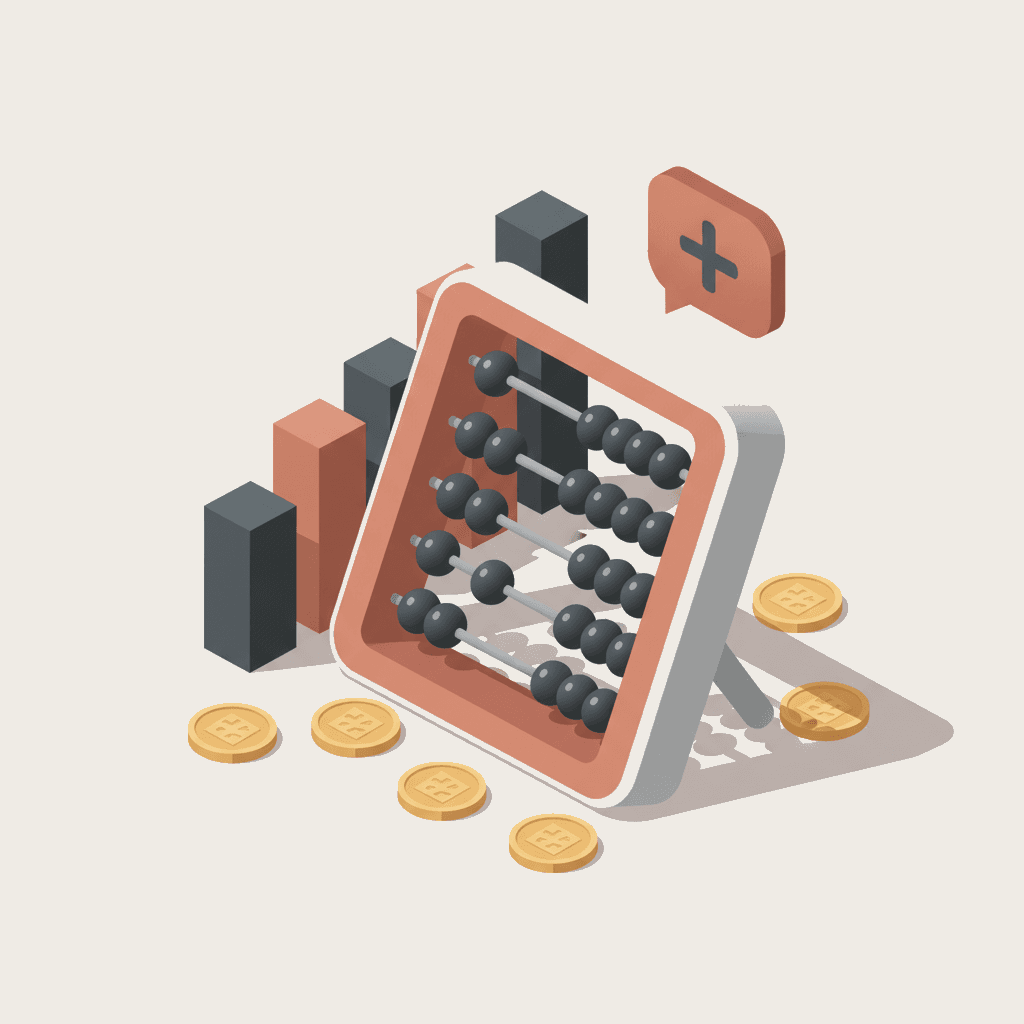
An AI chatbot deployed on a higher education website delivers a median return on investment of 280% within 12 months, breaking even after roughly 5 months. That figure combines the uplift in qualified leads, the drop in cost per lead, and the hours recovered by the admissions team.
A median, though, is only useful if you can replicate the calculation with your own numbers. This article walks through the formula step by step, populates it with real data from 18 institutions, and provides benchmarks by school type so you can model your own expected return.
For a broader overview of what a chatbot does in a higher education context, start with the complete guide to AI chatbots for schools.
Step 1: estimate the lifetime value of an enrolled student
Every ROI calculation starts with the same question: what is one student worth to your institution over the full length of their program?
Student Lifetime Value (SLV) covers cumulative tuition and fees, campus housing revenue, and alumni contributions. It excludes indirect revenues such as referrals or donations. Here are the benchmarks by institution type:
Student Lifetime Value by institution type (Source: calculation based on average published tuition and fees, US News Rankings, IPEDS data, institutional websites):
- Ivy League / R1 research university (4 years): $240,000
- Private liberal arts college (4 years): $220,000
- Business school (4 years undergraduate): $180,000
- Engineering program (4 years): $160,000
- Communications / media school (4 years): $140,000
- Regional public university — out-of-state (4 years): $120,000
- Regional public university — in-state (4 years): $52,000
- MBA (2 years): $130,000
- Community college (2 years): $18,000
- Continuing education: $12,000
A single additional enrolled student at a private university pays for years of chatbot subscription costs. That asymmetry is what makes the ROI case so compelling.
Step 2: benchmark the cost of acquisition
Acquisition cost includes marketing spend (advertising, college fairs, viewbooks), admissions team time, and technology tools — divided by the number of students who actually enroll.
Ranges vary significantly by institution type and target audience. Based on sector reports from EAB, NACAC, and IPEDS data:
- Private research university: $3,200 — $4,500
- Private liberal arts college: $2,800 — $3,800
- Regional public university (out-of-state recruitment): $2,500 — $3,500
- Regional public university (in-state recruitment): $1,800 — $2,600
- Community college: $800 — $1,400
- International recruitment: $4,000 — $6,000
A chatbot attacks this cost from two angles: it reduces cost per lead by automating first contact, and it raises the conversion rate at every stage of the funnel.
Step 3: the ROI formula, line by line
Here is the formula applied, using median data observed across 18 institutions between 2024 and 2025.
Before chatbot (baseline)
- Qualified leads per month: 120
- Cost per lead: $52
- Campus tour registration rate via form: 6.2%
- Monthly admissions spend (time + tools): ~$6,240
After chatbot (median outcomes)
- Qualified leads per month: 195 (+62%)
- Cost per lead: $32 (-38%)
- Campus tour registration rate via chatbot: 18.4%
- Monthly chatbot cost: varies by solution
The 12-month ROI reaches 280%, with a median payback period of 5 months (Source: median results across 18 institutions, including concurrent funnel optimizations, 2024-2025).
The calculation in practice
Take a university with an SLV of $180,000 (4-year private business school) and an acquisition cost of $3,500 (mid-range for private institutions).
- Monthly lead gain: 195 - 120 = 75 additional qualified leads
- Saving per lead: (52 - 32) x 195 = $3,900/month
- Additional leads converting to enrollments: at 2.3% conversion (business school benchmark), 75 x 2.3% = 1.7 additional enrollments per month
- Value of additional enrollments: 1.7 x $180,000 = $306,000/month in SLV generated
- Annual ROI: (total gains - chatbot cost) / chatbot cost x 100
Even counting only the cost-per-lead saving ($3,900/month = $46,800/year), breakeven arrives within months for virtually every solution on the market.
The bounce rate effect: an invisible multiplier
Direct ROI does not capture the full picture. A chatbot changes visitor behavior in ways that amplify every other metric in the funnel.
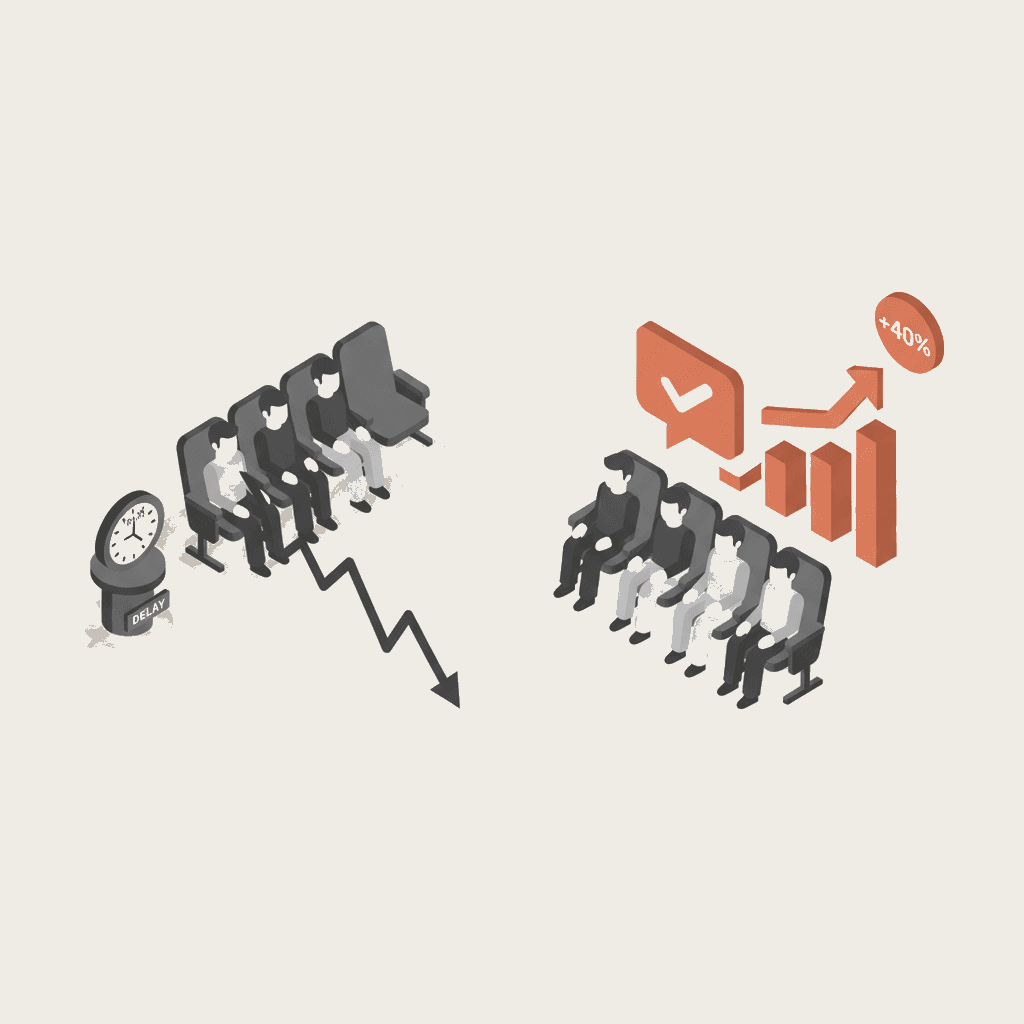
An A/B test across 22 partner school websites between September and December 2025 found that bounce rate dropped from 68% without chat to 41% with an AI chatbot — a relative reduction of 39.7% (Source: Skolbot A/B test, 22 schools, Sept. — Dec. 2025).
The secondary effects are equally striking:
- Pages per session: 1.8 to 3.4
- Session duration: 1 min 45s to 4 min 12s
A visitor who views 3.4 pages instead of 1.8 is mechanically more likely to discover the right program, ask a question, and begin the application journey. This compounding effect sits in no budget line, but it feeds every recruitment metric.
For a detailed comparison of chatbot versus form performance, see the chatbot vs contact form comparison for higher education.
Pitfalls in the calculation: what the ROI number hides
Shared attribution
The 280% median includes funnel optimizations deployed alongside the chatbot — page redesigns, better copywriting, retargeting campaigns. The chatbot alone does not account for the full gain. Based on institutional self-reporting, it drives between 50% and 70% of the improvement.
The ignored opportunity cost
Standard ROI calculations do not value time recovered. If your admissions team spends 15 hours a week answering repetitive questions (72% of prospect questions are automatable), those 15 hours redeployed to personalized applicant support increase the application-to-enrollment conversion rate. That effect is real but absent from the 280% figure.
The learning curve
The chatbot improves over time. Month-twelve results outperform month-three, because the model refines itself with accumulated conversations. Plan for more modest returns in the first quarter.
Benchmarks by school type
Not every institution starts from the same baseline. ROI depends on three variables: traffic volume, SLV, and initial conversion rate.
- Business schools: high SLV ($180,000 over 4 years), average initial conversion (2.3%). ROI driven by the value of each enrollment. Expected ROI: 250-350%.
- Engineering programs: solid SLV ($160,000 over 4 years), higher baseline conversion (4.1%). Marginal gains are smaller in percentage terms. Expected ROI: 180-280%.
- Technology schools: naturally high conversion (5.2%) because prospects are more digitally fluent. The chatbot optimizes an already-performing funnel. Expected ROI: 150-220%.
- Regional public universities: lower SLV for in-state students ($52,000 over 4 years) but high volumes. ROI depends primarily on cost-per-lead reduction. Expected ROI: 120-200%.
Prospects visit an average of 4.7 pages before asking their first question (Source: analytics + session replay, 15,000 prospect journeys, 2025-2026 cycle). The chatbot intercepts this silent browsing and converts it into a qualified interaction.