 ChatGPT
 Claude
 Perplexity
 Gemini
 Grok
GrokWhy routing SLAs matter for US prospective students
A routing SLA answers three questions for every inquiry: who owns it, how fast they must respond, and what happens if they don't. Without one, "someone will get back to you" is not a plan — it's a guess, and prospective students notice.
The reason this matters more in US admissions than in most other sales contexts is structural. A student applying through the Common App now submits an average of nearly six applications per cycle — Common App's own January 2026 deadline data puts it at 5.94 applications per applicant, up from 5.73 the year before (Common App reports and insights). Every inquiry your office receives is competing against five other admissions offices doing the exact same outreach, often on the exact same day.
Layer on Gen Z's baseline expectation of instant digital response — set by ChatGPT, food delivery apps, and same-day shipping tracking — and a routing gap of even a few hours reads as institutional neglect rather than normal business hours. The prospect doesn't wait to form that impression; they simply move down their list to the school that answered first.
SLA tiers: what "fast" actually means at each step
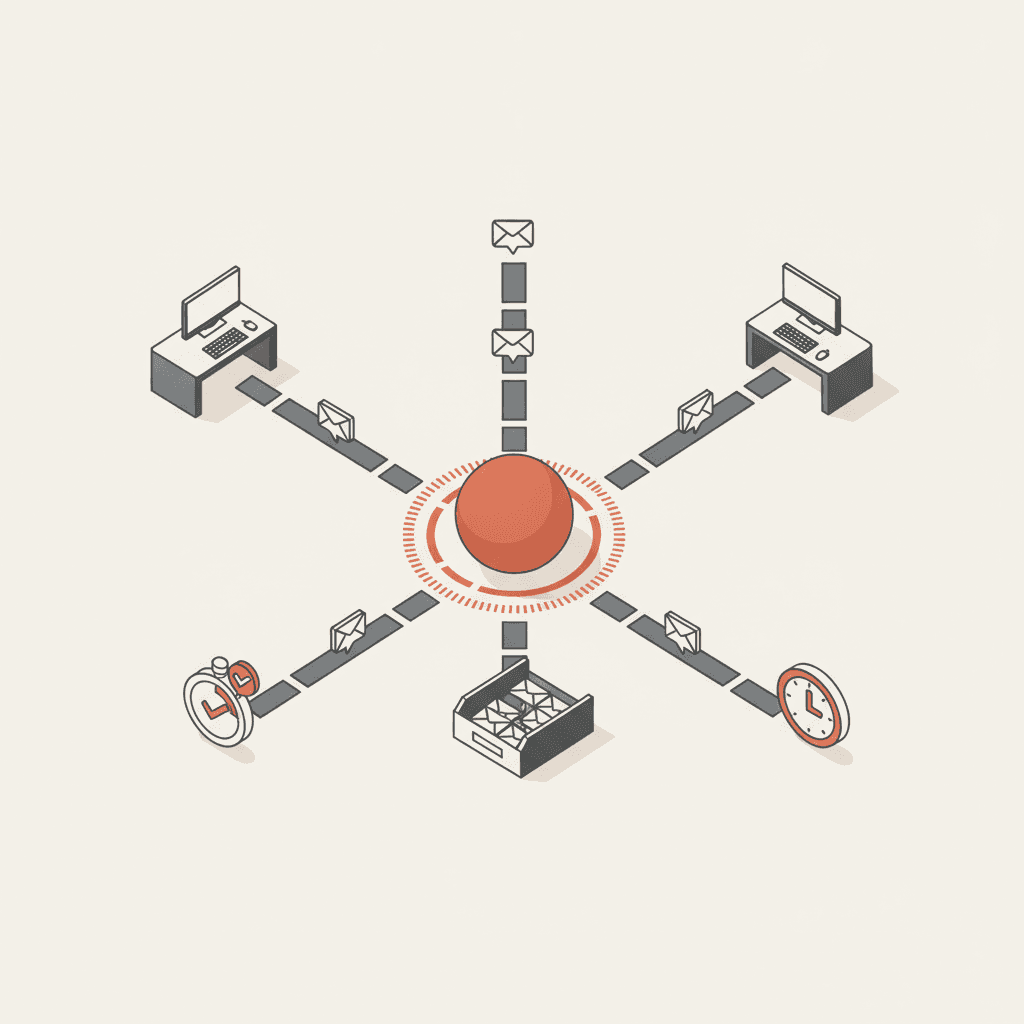
An admissions routing SLA needs at least three tiers, not one blanket promise. Tier 1 is an instant automated acknowledgment, tier 2 is a human first-touch window measured in hours, and tier 3 is an escalation trigger for when tier 2 is missed.
Tier 1 — instant acknowledgment. A chatbot or automated confirmation should respond within seconds, confirming the inquiry was received and answering anything answerable immediately (tuition ranges, deadlines, program basics). This tier never sleeps and never has a queue.
Tier 2 — human first touch. This is where most offices fail today. A mystery-shopping audit of response times found the current baseline is 47 hours for email, 72 hours for a contact form, and 3 minutes 20 seconds for phone calls — but only when someone actually picks up, which happens just 34% of the time. Human live chat averages 8 minutes, but only during business hours (Source: Skolbot mystery-shopping audit, 2025, 80 institutions). A realistic SLA target for a substantive human reply is <4 business hours for a warm prospect and <24 hours for a general inquiry — both a dramatic improvement on the current baseline, and both achievable without adding headcount if tier 1 absorbs the routine volume first. For a deeper look at why that baseline is so damaging to enrollment, see why response time is killing your enrolments.
Tier 3 — breach escalation. If tier 2's window passes with no human response logged, the inquiry should auto-escalate: reassign to a second counselor, flag a supervisor, or trigger a follow-up chatbot message so the prospect isn't left in total silence while the internal clock runs out.
Routing methods: how an inquiry finds the right counselor
Four routing logics compete inside most admissions offices, and none of them work well without qualification data collected before the handoff. Round robin is the simplest and the least accurate; intent-based triage is the most accurate and the hardest to run manually.
- Round robin — inquiries alternate evenly across the team. Fair for workload, blind to fit: a nursing-program question can land with a counselor who only handles business majors.
- Program or campus-based — routing follows the prospect's stated interest (major, campus, online vs. residential track). This is the default for multi-campus systems and any school with distinct professional programs.
- Workload balancing — a CRM tracks each counselor's open caseload and assigns new inquiries to whoever has capacity, preventing the top performer from silently absorbing every warm prospect while colleagues sit idle.
- Intent or score-based triage — inquiries are ranked by signals like a started FAFSA, a scheduled campus tour, or a downloaded viewbook, and the highest-intent prospects go straight to a senior counselor instead of waiting in the general queue.
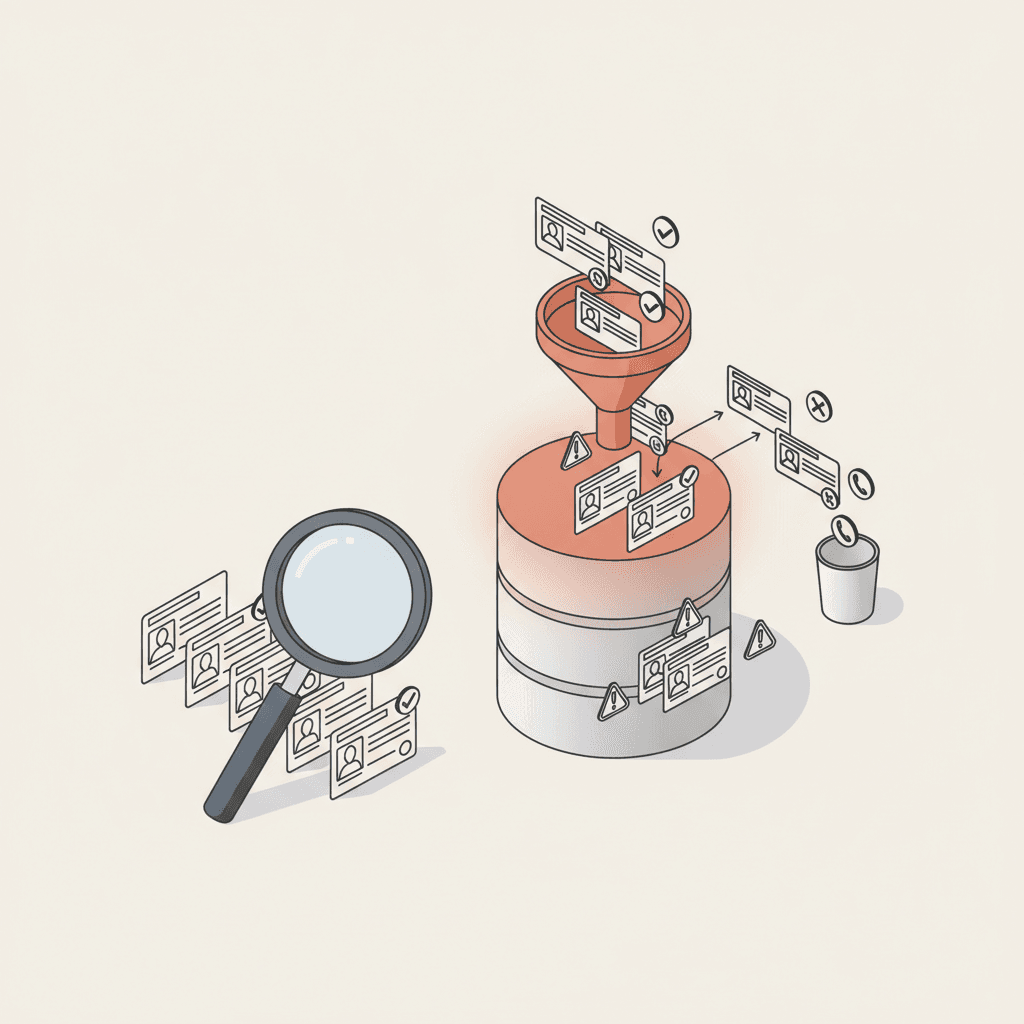
A chatbot improves all four by qualifying the prospect before routing happens — asking about program interest, expected graduation year, and timeline in the first exchange, so the routing rule has real data instead of a blank contact-form entry. Question complexity data backs up why this triage step matters: 72% of prospect questions are simple FAQ that the chatbot resolves on its own, 21% need school-specific context the bot can still handle with proper training, and only 7% genuinely require a human judgment call (Source: automatic classification of 12,000 Skolbot conversations, 2025). Routing rules should be built around funneling that last 7% to the right person fast — not around distributing 100% of raw volume evenly across the team.
The tooling spectrum, from shared inbox to higher-ed CRM
Four tiers of tooling handle routing in US admissions offices today, and the gap between the bottom and the top tier is the gap between missed SLAs and measurable ones.
Shared inbox or spreadsheet. The most common setup for a small office: inquiries land in a shared Gmail or Outlook folder, and whoever notices first replies. There's no routing logic, no SLA clock, and no record of who owns what — the highest-risk setup for both missed follow-ups and duplicate outreach.
Generic CRM. Tools like HubSpot or a generic Salesforce instance add assignment rules and a activity log, which is a real improvement over a shared inbox, but they weren't built around an admissions funnel — no native concept of application status, decision deadlines, or Common App/Coalition App data sync.
Higher-ed-specific CRM. Technolutions Slate is the dominant platform built specifically for admissions offices, with Salesforce Education Cloud and Ellucian CRM Recruit as the other major options institutions evaluate. EDUCAUSE's review of CRM adoption in higher ed notes that most implementations concentrate first on admissions and enrollment before expanding to the rest of the student lifecycle (EDUCAUSE Review, "Four Corporate Voices: Customer Relationship Management"). These platforms natively support the routing logic above — program-based assignment, workload rules, deadline-aware queues — because they were designed around the applicant journey rather than a generic sales pipeline. One brief note on the data itself: routing an inquiry into any CRM means storing a prospect's contact and behavioral data, which falls under FERPA once that prospect enrolls and generally under state privacy law before that — worth confirming with your data-privacy contact when selecting a vendor, but not a reason to avoid centralizing routing.
Chatbot-augmented routing. None of the tiers above solve the coverage gap: 67% of prospect activity happens outside business hours, with the single largest peak on Sunday between 8 and 9 pm — a share that climbs to 74% during peak admissions season and 81% around exam-results season (Source: Skolbot interaction logs, 200,000 sessions, Oct 2025 – Feb 2026). No human rotation realistically covers that pattern. A chatbot layered on top of whichever CRM tier you're at absorbs and pre-qualifies that off-hours volume, then routes the output into the same queue your team already works Monday morning — closing the coverage gap without asking anyone to work nights.
How to monitor SLA compliance
SLA compliance should be tracked as a weekly number, not a quarterly retrospective — by the time a monthly report flags a problem, a full admissions cycle's worth of prospects has already gone unmanaged. Three metrics cover it: average and median time-to-first-response, the percentage of inquiries answered inside each tier's target window, and a breach count broken down by routing queue so you can see which program or campus is falling behind.
The upside of getting this right compounds. Institutions that combine faster routing with a chatbot see qualified prospects rise from a median of 120 to 195 per month (+62%), cost per qualified prospect fall from $42 to $26 (-38%), and campus-visit-day registration climb from 6.2% to 18.4% (Source: median results across 18 schools, 2024-2025 cycle). Routing and speed aren't the only variables in that gain — funnel and content changes typically move alongside a chatbot rollout — but the response-time improvement is consistently the first lever institutions credit. That upstream fix also compounds with the top of the funnel: schools running a chatbot cut the 91% of visitors who leave without any contact down to 76%, a 167% increase in first contacts for the routing system to even work with (Source: Skolbot funnel analysis, 30 institutions, 2025-2026 cohort).
SLA tiers by admissions team size
| Team size | Typical tooling | Human first-touch target | Off-hours coverage | Biggest SLA risk |
|---|---|---|---|---|
| 1-2 counselors | Shared inbox / spreadsheet | 24-48 hours | None | Inquiries lost in a shared inbox with no owner |
| 3-8 counselors | Generic CRM | 4-24 hours | Partial, manual | Uneven workload, no program-based routing |
| Full admissions office | Higher-ed CRM (Slate, Salesforce Education Cloud, Ellucian) | <4 business hours | Partial, manual | Breach escalation not automated |
| Any size + chatbot layer | Higher-ed CRM + chatbot pre-qualification | <4 business hours, <3s acknowledgment | 24/7 | None structural — monitoring discipline becomes the limiting factor |