 ChatGPT
 Claude
 Perplexity
 Gemini
 Grok
GrokOne script for every purchased lead is why your ROI looks worse than it is
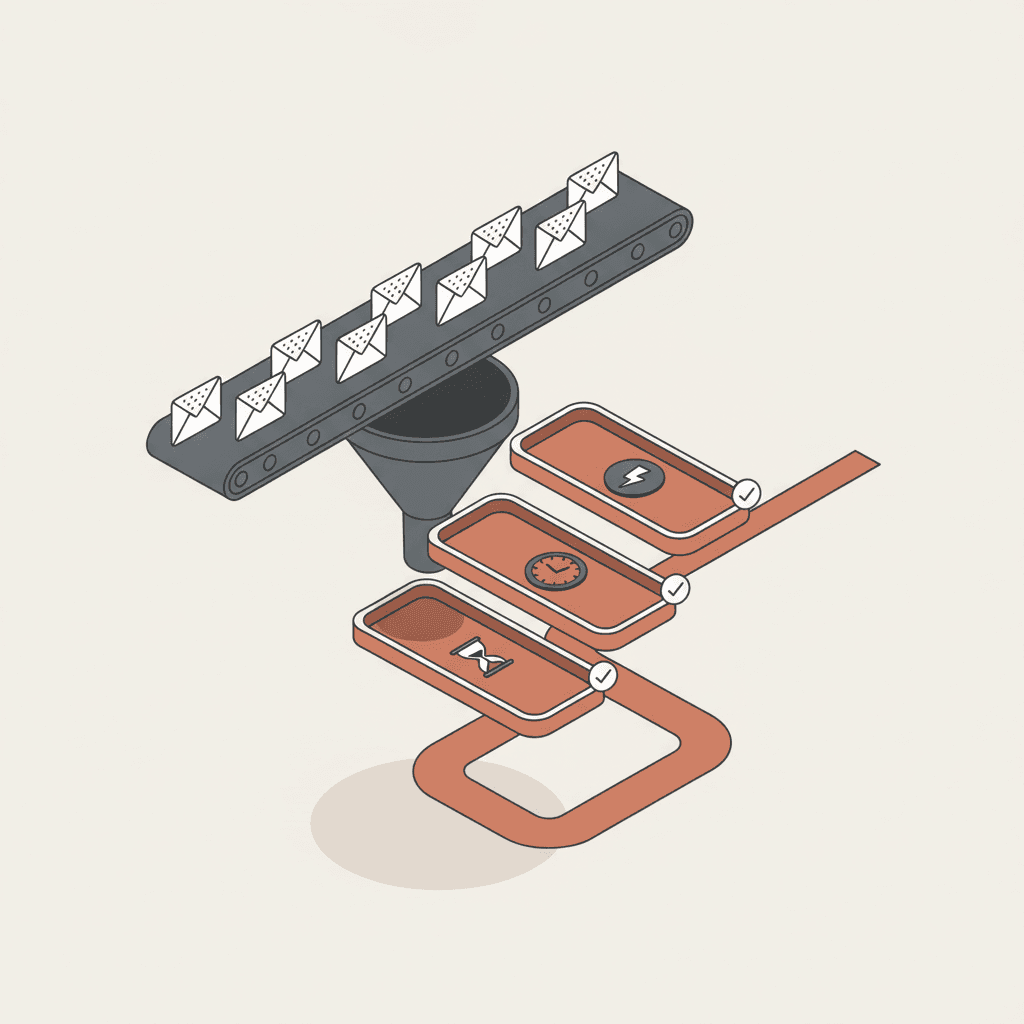
A phone-verified lead from a vetted vendor and a raw name pulled from a Student Search Service list are not the same product, even though they land in the same CRM queue with the same "new lead" tag. Most enrollment teams route both to the same counselor, the same script, the same day-three cadence. That single decision is quietly responsible for a large share of purchased-lead underperformance — not the vendor, not the price per name.
Blended treatment produces blended results: your best leads wait behind your worst ones in the call queue, and your worst leads soak up expensive live-call attention they were never going to convert with. On 500 purchased leads a month, half phone-verified and half raw name-buy, worked identically, the verified half might convert at 8% and the raw half at 0.5% — with equal time on both, effective cost per enrolled student on the raw half runs 10 to 15 times higher, even at a similar per-name invoice price. That gap stays invisible until you break results out by source and tier, which most CRMs aren't configured to do out of the box.
This piece assumes you already buy leads — vendor and portal selection is its own decision. What follows is the playbook for once they land: tiering at intake, differentiated response speed and nurture, and proving which sources are worth the money.
Tier leads by source and verification, not by vendor name alone
The tier that matters is not "which vendor did this come from" — it is "how much verified intent does this record actually carry." Four tiers cover most purchased and organic-adjacent inquiry sources in US higher ed marketing, from live conversations at NACAC fairs to bulk Student Search Service name-buys:
| Tier | Typical source | Verification signal | Realistic conversion range |
|---|---|---|---|
| Tier 1 — Verified | Phone-verified vendor leads, live conversations at NACAC fairs, admitted-student referrals | A human confirmed interest and program fit before the record reached you | 6%–12% |
| Tier 2 — Event scan | Badge scans at college fairs, QR scans at high school visits, campus tour sign-ins | Physical presence, minimal or no live conversation | 2%–5% |
| Tier 3 — Paid social / organic form | Meta/Instagram lead ads, Google search inquiry forms, organic web form fills | Self-initiated action, but shallow context and no vetting | 1.5%–4% |
| Tier 4 — Raw name-buy | Student Search Service (Encoura/ACT) list purchases, appended data, bulk demographic matches | Academic profile match only, no direct interaction with your institution | 0.3%–1.5% |
These ranges are directional — yours will vary by program, region, and price point — but the relative order rarely flips. The mistake most teams make is buying into all four tiers, then treating every record the same way once it lands, discarding the one piece of metadata that predicts how to work it profitably: source and verification method.
Build tiering at intake, in the CRM field mapping, before a counselor touches the record. If your CRM (Slate, Salesforce Education Cloud, HubSpot) can't tag source tier automatically at ingestion, add a required field to every import job — retrofitting after three months of blended data is far more painful than tagging correctly on day one.
Match your response-time SLA to the tier, not to your team's default
Speed-to-lead should shrink as verification rises, and the research on why is not close. Harvard Business Review's analysis of 2.2 million B2B leads found firms contacting a lead within an hour were nearly seven times more likely to qualify it than firms waiting even 60 minutes. HubSpot's lead management research is blunter still: waiting past ten minutes can cut qualification odds by roughly 400%.
That's response speed in general. The tiering question is which leads deserve five-minute treatment and which do not need it at all: a five-minute SLA on a raw name-buy wastes your fastest channel — a live call — on a record with a <1.5% enrollment chance, while a three-day drip on a phone-verified lead who already named a program hands that prospect to a competitor who called back sooner.
| Tier | Response SLA | Primary first-touch channel |
|---|---|---|
| Tier 1 — Verified | <5 minutes | Live phone call, AI chatbot handoff to counselor |
| Tier 2 — Event scan | <2 hours same business day | Chatbot pre-qualification, then SMS/email referencing the event |
| Tier 3 — Paid social / organic | <24 hours | Chatbot first response, email follow-up |
| Tier 4 — Raw name-buy | 72 hours, into a drip sequence | Email nurture only until an engagement signal appears |
Channel matters as much as speed. Skolbot's mystery-shopping audit across partner institutions found average response times of 47 hours by email and 72 hours by contact form, versus 8 minutes by live chat (business hours only) and roughly 3 seconds by AI chatbot, around the clock; phone converts fastest when answered, but only a 34% answer rate. A human call still wins Tier 1 when it connects — outside business hours, or for every other tier, an instant automated response beats a fast human one that doesn't happen until Monday.
Nurture cadence should differ by tier — and by declared program interest
A Tier 1 prospect who already named a program does not need a generic viewbook drip; a Tier 4 name-buy with no declared interest does not need a same-day counselor call it will likely ignore. Build at least two axes into your nurture logic: source tier and declared or inferred major.
By tier. Tier 1 gets a direct, personal cadence: a same-day call attempt, a calendar link to a counselor, and a 48-hour follow-up referencing the specific conversation that generated the lead. Tier 2 gets a cadence that re-establishes context — "we spoke with you at [fair name]" — since badge scans often leave weak or no memory on the prospect's side. Tier 3 gets a multi-touch email and SMS sequence testing engagement before escalating to a call. Tier 4 gets the longest runway: four to six weeks of low-frequency content (program spotlights, cost calculators, outcome data), with no live outreach until a click or reply signals real engagement and the record graduates out of Tier 4.
By program interest. Layer major on top of tier: a nursing-interested prospect should see clinical placement and licensure pass rates, not a generic newsletter; a business prospect should see internship and starting-salary data. This matters more for purchased leads, since you have less first-party browsing data to infer intent from — the declared program field may be the only signal you have.
Feed the tier into your lead scoring model — don't replace it
Source tier is one input into lead score, not a substitute for it. A Tier 1 lead that never opens an email should eventually score lower than a Tier 3 lead who has visited your program page four times and registered for an open house. Add tier and verification method as scoring variables alongside behavioral signals, and let the composite score — not tier alone — decide when a record escalates to a counselor. Point weighting and thresholds are covered in our lead scoring guide; this piece covers the intake layer that feeds that model good data instead of noise.
Measure profitability at cost per enrolled student, not cost per lead
Cost per lead is the wrong scoreboard for comparing purchased sources, because it ignores the conversion-rate gap the tiers above are built around. A raw name-buy might cost $0.50 to $2 per name — cheap on paper — but at a 0.3%–1.5% conversion rate its cost per enrolled student can land well above the $2,795 to $5,000 sector-estimated range for private US institutions. A phone-verified lead at $30 to $65 apiece often produces a lower cost per enrolled student, because the conversion multiple more than offsets the higher unit price.
Run this comparison per source, per tier, per term — not as a one-time exercise. The full CAC formula is covered in our student CAC guide; apply it separately to each tier rather than blending purchased-lead spend into one acquisition-channel line. You can measure correctly and still be measuring the wrong thing if you never break the invoice out by tier.
Where an AI chatbot fits: instant, differentiated first response at every tier
An AI chatbot's advantage here is not that it replaces admissions counselors — it applies the tiering and routing logic instantly, to every inbound record, regardless of when it lands or which vendor it came from. A raw name-buy that clicks through at 11 p.m. on a Sunday gets an immediate, program-relevant conversation instead of a confirmation email unread until Monday. A phone-verified Tier 1 lead calling after hours gets routed and pre-qualified in seconds instead of waiting for the next business day.
Institutions deploying a chatbot for this report qualified inquiries rising from a baseline of 120 per month to roughly 195 (+62%), cost per qualified inquiry falling about 38%, and open-house registration climbing from 6.2% to 18.4% — a median across partner institutions, not a guarantee for any single school. First-contact drop-off, the largest funnel leak at roughly 91% industry-wide, falls to about 76% once a chatbot handles instant response: 167% more first contacts from the same traffic. None of that requires headcount — it requires freeing counselors from working every record identically, so they spend time where a human voice moves the needle: Tier 1 and engaged Tier 2 records.
One caution: confirm phone and SMS cadences respect the FCC's Telephone Consumer Protection Act rules, especially for Tier 4 name-buys where the prospect never opted in to contact from your institution directly. Email-first nurture is the safer default there.