 ChatGPT
 Claude
 Perplexity
 Gemini
 Grok
GrokWhat counts as a dormant lead, and when to act on one
A dormant lead is a prospective student who showed a clear signal of interest — a viewbook download, an inquiry form, a question asked in a chatbot — then went silent. In admissions, the threshold for "dormant" isn't the generic 90-day rule used in B2B sales; it depends entirely on where the prospect sits relative to the Common App or Coalition App calendar.
A prospect who requested a viewbook in September and hasn't engaged since by mid-October, right as Early Decision and Early Action deadlines (typically around November 1) approach, is already cooling fast. The same 30 days of silence in July, well outside any active deadline window, means much less. The simplest rule: cross-reference the silence with your admissions cycle, not with a fixed calendar count.
This dormant database isn't a write-off. These are contacts who already know your institution, gave you their email voluntarily, and cost nothing to re-engage. Reactivating an existing lead is consistently cheaper than acquiring a new one through paid search, college fairs, or name-buy lists — you're not paying to generate a new inquiry, only to prompt an action from someone who already raised their hand. Every dormant lead you win back instead of replacing is a direct saving against your acquisition budget, even without attaching a specific dollar figure to it.
The 3-email reactivation sequence that produces a measurable return
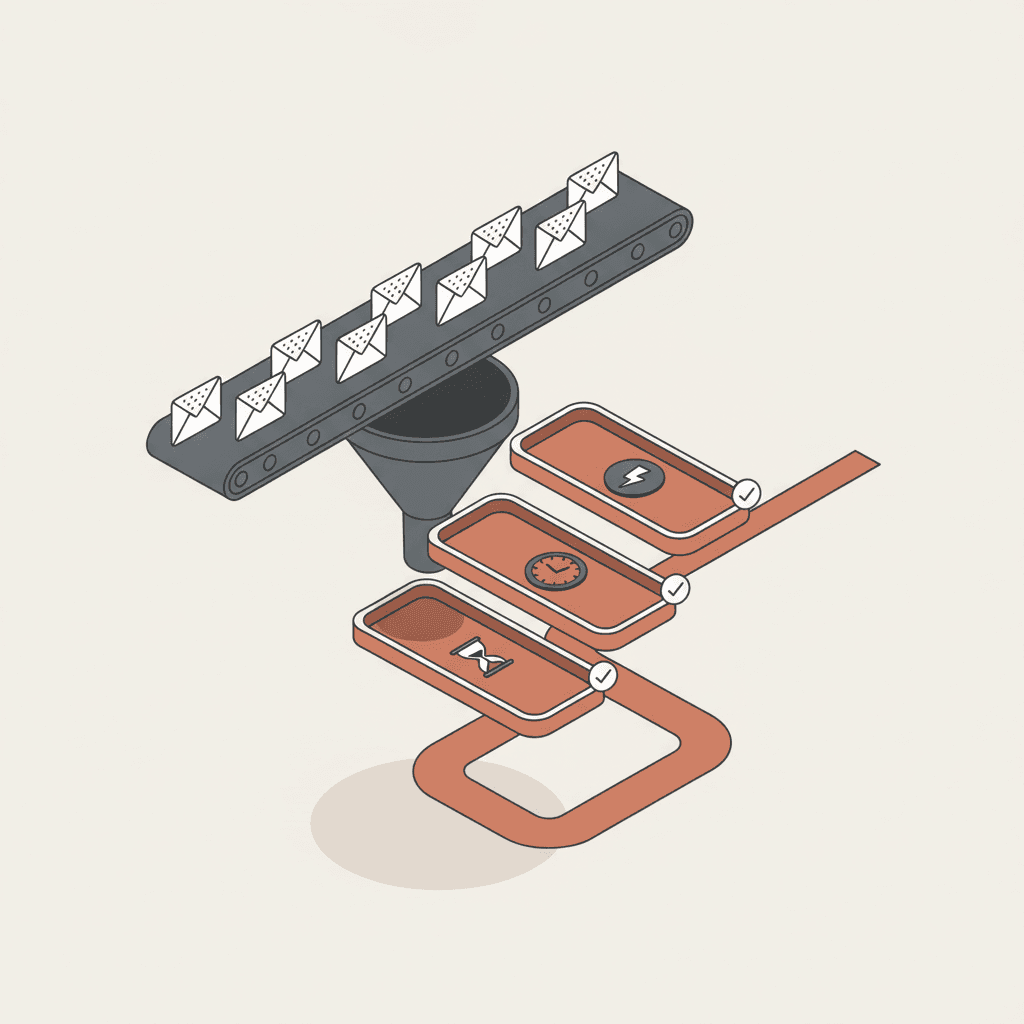
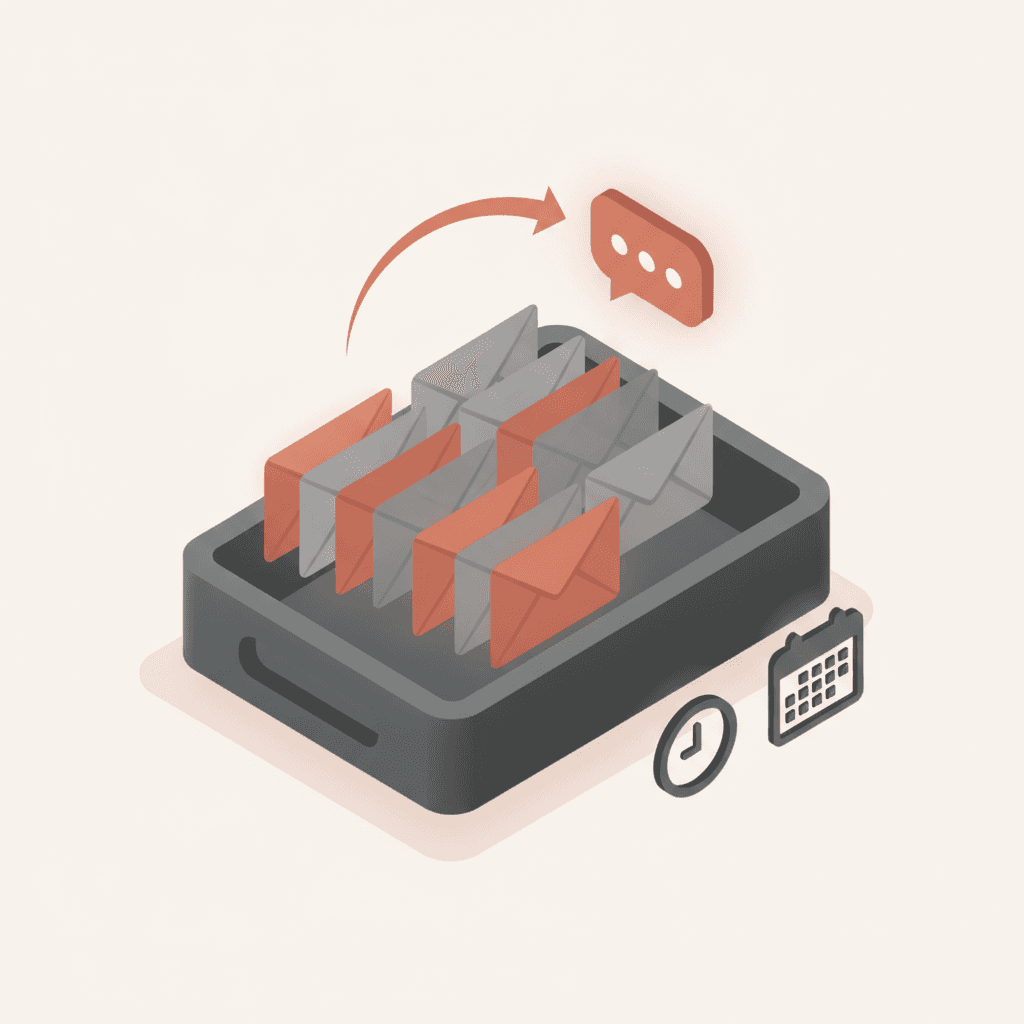
An effective reactivation sequence runs three emails maximum, spaced 5 to 7 days apart, backed by a chatbot follow-up on whichever channel the prospect already used. Beyond three attempts with no response, you're adding pressure without adding conversions — move the contact out of the active sequence at that point.
Email 1 — Remove the obstacle, don't repeat the pitch
The first email doesn't sell anything. It names the most likely obstacle directly: "Had a question about financial aid we didn't get to?" or "Was the application checklist confusing?" A prospect almost never disengages out of pure disinterest — it's usually an unresolved concern: academic fit, cost, logistics, or family circumstances. Naming that obstacle instead of restating your original pitch typically doubles the open rate compared to a generic "just checking in" nudge.
Email 2 — Fresh proof and updated information
Five to seven days later, add something concrete the prospect didn't have the first time around: a graduate outcomes statistic, a testimonial from a recent alum in a related field, or a deadline that's now approaching. This is also the moment to surface anything new since the first contact — an added campus tour date, a scholarship deadline extension, a new virtual info session.
Email 3 — A clear, low-pressure final ask
The third email offers an explicit binary choice: "Still interested? Grab 15 minutes with an admissions counselor" or "Not the right fit anymore? Let us know in one click." That built-in exit option counterintuitively improves response rates — it lowers the perceived friction of replying and pushes fence-sitters to act instead of ignoring yet another email.
Our guide to email nurturing for student prospects covers the broader nurture mechanics beyond reactivation alone, and our article on the email sequence after a viewbook or brochure request covers nurturing prospects who are still actively engaged.
Segment before you send: four reasons prospects go quiet
Sending the identical sequence to your entire dormant database wastes most of its reactivation potential. A prospect who stalled on cost doesn't respond to the same message as one comparing your school against a competitor. Segment your dormant list into four profiles before drafting a single email.
| Segment | Disengagement signal | Priority reactivation message |
|---|---|---|
| Financial | Visited the tuition/cost page right before going quiet | Financial aid, payment plans, net-price calculator |
| Logistical | Never responded to a call or tour scheduling request | Asynchronous option: chatbot, recorded FAQ, virtual tour |
| Competitive comparison | Visited several program pages, then disappeared | Concrete differentiator: outcomes data, internship pipeline, alumni network |
| Simple forgetting | One old interaction, no negative signal | Factual reminder + explicit deadline |
This segmentation relies on which pages a prospect viewed before their last interaction and what they asked a chatbot, if one was in use — two signals most CRMs and scoring tools already capture if you're tracking on-site behavior. Our article on lead scoring for student recruitment explains how to turn those behavioral signals into a prioritized outreach order.
The chatbot: an underused reactivation channel
Email isn't the only reactivation channel, and it's often not the fastest one. An AI chatbot on your website catches a dormant prospect the moment they come back on their own to check a page — itself a reactivation signal — and can pick up the conversation right there instead of waiting for the next email to be opened.
Prospects who interact with an AI chatbot return within 7 days in 34% of cases, versus 12% without a chatbot — a 2.8x multiplier (Source: Skolbot cohort analysis, 8,000 tracked sessions over 90 days, 2025). The gap comes down to availability: a prospect checking a deadline on a Sunday night gets an answer immediately instead of waiting until Monday morning, which turns a quick verification visit into an active conversation again.
In practice, a well-configured chatbot recognizes a visitor returning after a long gap and adjusts its opening message accordingly — "Looks like you started an application a while back. Need help finishing it?" — instead of running the same generic flow it would show a first-time visitor. That contextual targeting is what turns a passive channel (an email waiting to be opened) into an active one that captures intent the instant it resurfaces.
What not to do
Three recurring mistakes kill reactivation return rates, even when the email content itself is well written.
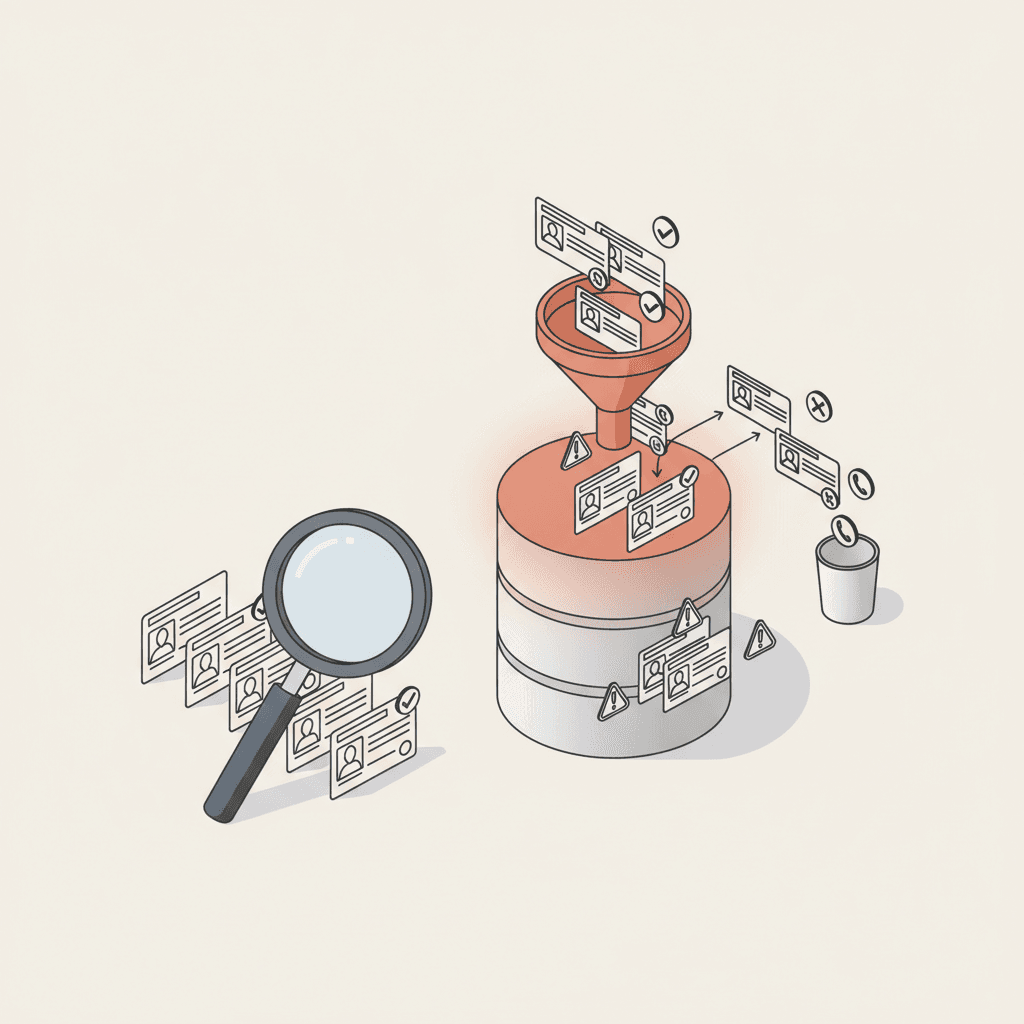
- Sending to an unpurged list. Emailing addresses that have bounced for 18 months damages deliverability for your entire campaign, not just the reactivation send. Clean bounced and invalid addresses before launching the sequence.
- Going past three attempts. Beyond that, you generate unsubscribes and spam reports that penalize your active campaigns, not just the reactivation effort.
- Ignoring FERPA and state privacy retention rules. Prospect data collected before a student enrolls generally falls outside FERPA, but it's covered by state privacy laws — California's CCPA and comparable statutes now active in more than a dozen states — that require disclosed retention periods and, in several states, an easy opt-out from further contact. Reaching out to a contact you've held indefinitely without a documented retention policy is a compliance exposure on top of a marketing one; the FTC's guidance on educational advertising is a useful baseline for what "clear and non-deceptive" outreach looks like even where FERPA doesn't technically apply.
What results to expect: the metrics to track
Three metrics are enough to judge a reactivation campaign: open rate, click rate, and true return rate — a prospect resuming a concrete action such as starting an application, booking a call, or asking the chatbot a question. Automated reactivation campaigns average a 20-25% open rate across program types, compared with 42% when the trigger is behavioral rather than a fixed calendar send (HubSpot Research, 2025) — which is exactly why pairing email with a chatbot-detected return signal outperforms sending on a set date.
If your open rate sits below 15% on the first email, the problem is almost never the message body — it's the subject line, the sender name, or list quality. Test a named sender (an actual admissions counselor's name instead of "Admissions Office") before you touch the copy; that single change often lifts open rate by several points on its own.
Track these metrics separately by the disengagement segment above. An aggregate 8% return rate can hide a "financial" segment converting at 15% and a "simple forgetting" segment at 3% — two very different situations that call for different message fixes, not the same one applied twice.
Schools with an AI chatbot cut first-contact drop-off from 91% to 76%, i.e. 167% more first contacts (Source: Skolbot funnel analysis, 30 schools, 2025-2026 cohort). That gap matters for reactivation specifically: a chatbot doesn't just improve first contact with new visitors, it also captures the returning dormant prospect who would otherwise browse your site silently and leave again without triggering any follow-up at all. For the full picture of how reactivation fits into your broader recruitment strategy, see our pillar guide to digital marketing for higher education.