 ChatGPT
 Claude
 Perplexity
 Gemini
 Grok
GrokOne follow-up process for every purchased lead is why the ROI looks worse than the source
A course-comparison portal lead who requested a callback within the hour is not the same prospect as a name on a list an aggregator sold you last month. Treat them identically — same email drip, same generic template, same admissions officer working top-to-bottom through a spreadsheet — and the blended conversion rate looks mediocre. It isn't. One tier converts well and gets starved of attention; another converts badly and eats admissions hours it will never repay.
This is the operational half of the purchased-leads question. If you've already worked through where to buy — portals, expos, paid social, aggregators — this piece covers what happens after the data lands in your CRM, where the enrolment upside actually gets decided.
For the acquisition-cost side, see our guide to calculating true student CAC, and for broader context, our digital marketing guide for Australian higher education.
Why blended treatment quietly destroys purchased-lead ROI
Blended treatment fails because it averages away the one variable that predicts enrolment: how the lead was generated.
Say a mid-sized private provider buys 500 leads a month across four sources for a combined AUD 18,000, run through one sequence and one admissions queue. Blended cost per lead is AUD 36, blended lead-to-enrolment lands near 3%, for roughly 15 enrolled students at a blended cost per enrolled student around AUD 1,200. That single number hides four very different stories:
| Source tier | Share of the 500 leads | Cost per lead (AUD) | Realistic enrolment rate | Cost per enrolled student (AUD) |
|---|---|---|---|---|
| Phone-verified portal enquiry | 15% (75 leads) | 55 | 11% | 500 |
| Expo / open-day badge scan | 25% (125 leads) | 22 | 4% | 550 |
| Paid social lead form | 30% (150 leads) | 30 | 2.5% | 1,200 |
| Raw aggregator name-buy | 30% (150 leads) | 18 | 0.5% | 3,600 |
(Figures above are an illustrative model built from the same per-channel cost ranges published in our student CAC guide, not a single client result.)
The aggregator tier looks cheap per lead and is by far the most expensive per enrolled student — nearly 7 times the phone-verified tier. A report tracking only blended CPL never surfaces that gap. External benchmarking supports the shape of the pattern: purchased sources convert at roughly half the rate of first-party enquiries sector-wide, and the gap widens once "purchased" is split into sub-tiers rather than treated as one bucket (Search Influence, 2026 higher-education marketing benchmarks).
The fix isn't to stop buying cheap-source leads — a 0.5% rate on an AUD 18 lead can still be profitable at scale. It's knowing which tier you're looking at before deciding how much attention it gets.
Build a source-quality tiering model at intake
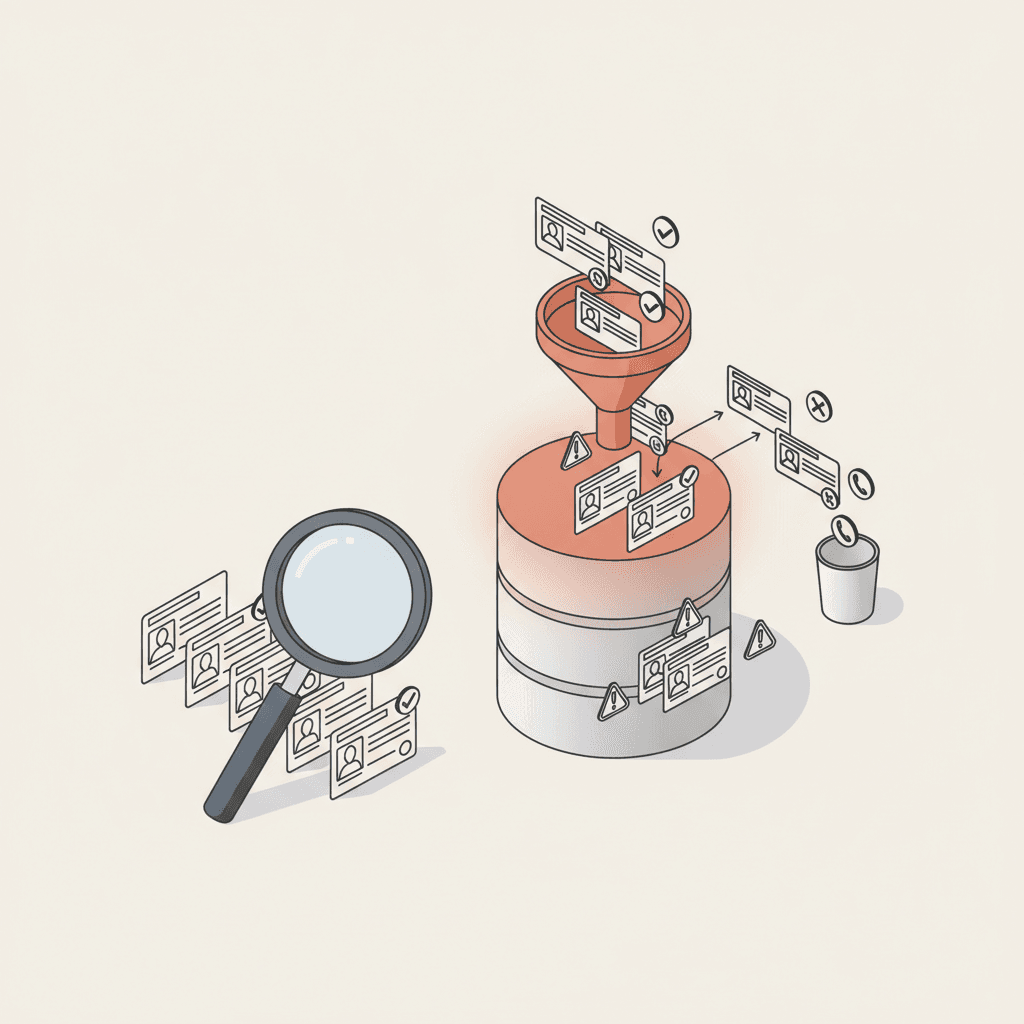
Tiering happens the moment a lead enters your CRM, based on how it was generated, not on anything the prospect has told you yet. Four tiers cover most purchased sources an Australian institution encounters.
Tier 1 — Phone-verified enquiry. Reached and confirmed by phone after requesting a callback, or handed over by a portal running its own verification call. Highest intent, lowest volume.
Tier 2 — Expo or open-day walk-up scan. A badge scan at a careers expo, a QR code at your own open day, or a third-party recruitment fair. Self-selected by attending, but a prize-draw scan is a far weaker signal than a callback request.
Tier 3 — Paid social or organic-adjacent lead form. Meta or TikTok lead ads, gated course-guide downloads, quiz-style "find your course" tools. Convenient for the prospect, which is exactly why the intent signal is weaker.
Tier 4 — Raw aggregator name-buy. Bulk contact lists from brokers or portals that never asked the prospect for anything beyond, at some point, ticking a box related to "further education." Lowest cost, lowest intent, and the tier needing the closest look at consent: the further removed the data, the harder it is to demonstrate the collection notice required under Australian Privacy Principle 5 was ever presented.
Tag every incoming lead with its tier at the point of import — a CRM field, not a mental note.
Match speed-to-lead SLA to the tier, not to a single house standard
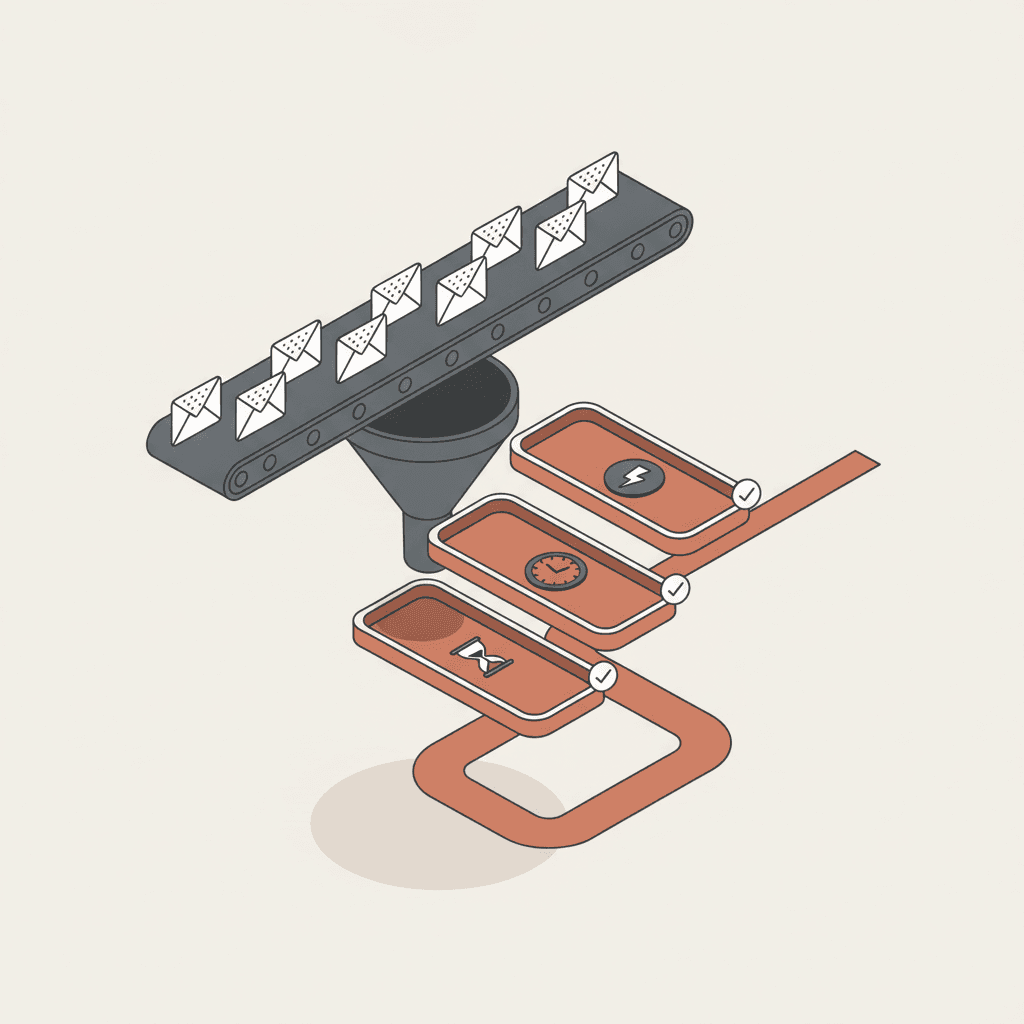
The highest-intent tier should get the fastest human response, and every tier should get an instant acknowledgement regardless of who is rostered on. One SLA across all four tiers means over-resourcing the aggregator names or under-resourcing the phone-verified ones — most institutions manage both at once, because a single queue processes leads in arrival order, not the order they matter.
Response time compounds: analysis of more than 15,000 leads by the Lead Response Management study, later cited widely by Harvard Business Review, found contacting a lead within five minutes rather than thirty made a team roughly 21 times more likely to qualify it (Harvard Business Review). HubSpot's research agrees: most consumers expect a reply inside ten minutes (HubSpot). A tiered SLA turns that into a rota:
| Tier | Target first response | Channel | Who owns it |
|---|---|---|---|
| 1 — Phone-verified | <5 minutes during business hours; AI chatbot instantly outside them | Phone first, chatbot fallback | Senior admissions officer |
| 2 — Expo/open-day scan | <2 hours | SMS + email, chatbot for after-hours | Admissions team, rostered |
| 3 — Paid social/organic-adjacent | <24 hours | Automated email + chatbot follow-up | Marketing automation, human review daily |
| 4 — Aggregator name-buy | <72 hours, batched | Email nurture only | Marketing automation |
The chatbot line matters because it's the one layer that can hit tier-1 speed on every tier at once: email averages 47 hours to a first reply and human live chat only covers business hours, while a chatbot answers in roughly 3 seconds, 24/7. For a fuller SLA framework by team size, see our companion piece on lead routing SLA for admissions teams.
Differentiate nurture cadence and content by tier — and by course interest
Nurture content should answer the question each tier is actually asking, at a pace it can absorb, and never ignore which course the prospect ticked. A phone-verified prospect asking about nursing needs HECS-HELP eligibility and placement details within days; an aggregator name with no declared interest needs a broad, low-frequency sequence that earns the right to ask a qualifying question first.
A workable structure: Tier 1 gets 3-4 program-specific touches in the first week — a personal call, a tailored email to the exact course page, an open-day invitation. Tier 2 gets a same-week thank-you referencing the specific event, then a short program-matching sequence over 2 weeks. Tier 3 gets a longer 4-6 week sequence starting broad and narrowing toward the declared course once the prospect has opened 2-3 emails. Tier 4 gets low-frequency monthly content until behaviour upgrades the lead.
Course interest compounds the tier effect: a "business" prospect gets business-specific proof points regardless of tier. Tier decides frequency and channel; declared program decides content.
Feed the tier into scoring, and measure it by cost per enrolled student
Source tier should be one input a scoring model weighs, not a separate system running in parallel. A raw aggregator lead that opens three emails and starts a chatbot conversation about a specific program has behaviourally earned its way toward tier 1 treatment, even though its source tag never changes. A model that doesn't know the tier can't make that trade-off. We cover the scoring mechanics themselves in a dedicated companion article on lead scoring for student recruitment; treat tiering as the input layer, not a replacement.
The reporting side matters just as much. Cost per lead tells you how cheap the acquisition was; cost per enrolled student tells you whether it was worth it — the table earlier in this piece shows the two pointing in opposite directions. Report by source tier, not just by channel: a "paid social" line blending a well-targeted campaign with a broad prize-draw form always looks mediocre; split by tier and the targeted campaign is usually worth expanding while the broad form is worth renegotiating. For the full methodology, see our guide on calculating true student CAC.
Where an AI chatbot fits in a tiered follow-up process
A chatbot's role is not to replace the tiering model — it's to guarantee every tier gets its first response instantly, then route the prospect to the right human queue based on what it learns in conversation. That matters because tiering only works if the SLA behind it holds, and most admissions teams can't staff a 24/7 phone line to hit a <5-minute standard for tier 1 leads arriving at 9pm on a Sunday.
Deployed against a tiered process, a chatbot does three things no admissions officer can do at once: answer instantly regardless of tier or channel; ask the qualifying questions that upgrade or confirm a lead's tier (program interest, ATAR band, domestic or international status); and hand off only the leads needing a human touch, while tier 4 stays in automated nurture until engagement justifies staff time.
Institutions running an AI chatbot report first-contact drop-off falling from 91% to 76%, a 167% increase in first contacts from the same traffic, because the chatbot catches after-hours and weekend enquiries that would otherwise sit unanswered for two days (Source: Skolbot funnel analysis, 30 European partner schools, 2025-2026 cohort; cited directionally, not from an Australia-specific study). Applied to purchased leads, a tier-2 expo scan submitted on a Saturday night gets an instant, program-relevant reply instead of waiting until Monday, by which point a competitor's chatbot has often already had that conversation.
None of this replaces judgement. A senior admissions officer still decides which tier-1 leads get a personal call versus a chatbot handoff, and which tier-4 batches are worth tracking at all. The chatbot's job is making the model execute at the speed the data demands, around the clock, not only when your team is rostered on.